
The German Imperial Army in the World War - Structure and Organization - Fortification Troops
As early as mobilization, so-called fortification troops were planned. These were to carry out the necessary earthworks in the course of strengthening the fortresses.
Armierung meant the conversion of a fortress from a peacetime to a wartime state.
These units were staffed by former officers and older non-commissioned officers. In addition to an adjutant, an accounting officer and a company sergeant major, there was also medical service and other subordinate personnel.
The demand for such troops was very great and became even greater with the transition to positional warfare. Therefore this branch was further expanded, e.g. by assigning men liable for the Landsturm — but only those fit for work.
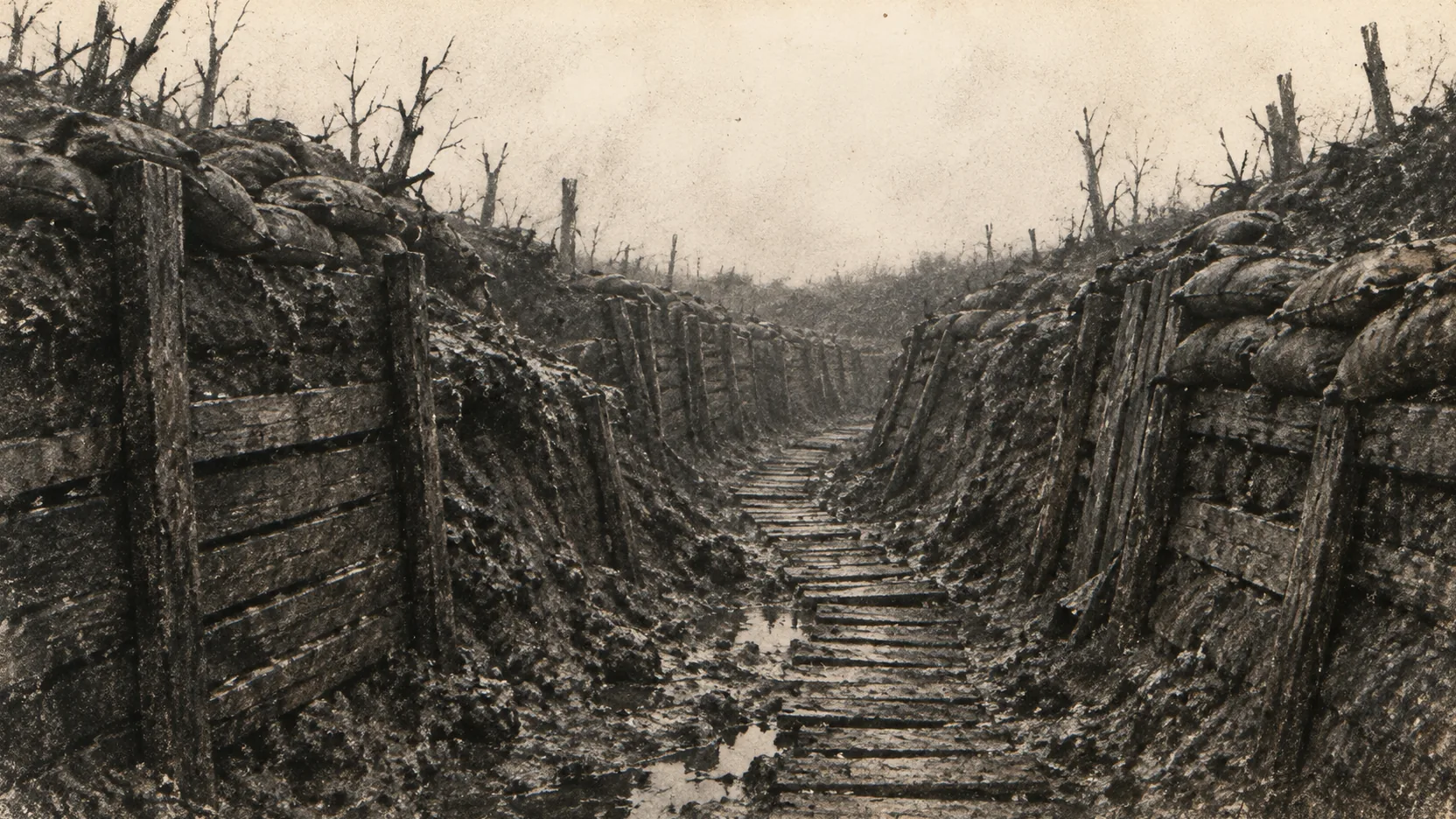
Their tasks were the creation or improvement of existing road networks and the construction of reserve positions outside enemy fire.

During the war 217 such battalions were raised, namely Fortification Battalions No. 1–200 and the Bavarian Fortification Battalions No. 1–19.
The respective establishment strength was 3 officers and 520 men.

The fortification battalions initially wore the colored peacetime uniform with — since 1915 — an armband with black lettering.
However, Litewken were often worn instead of the dark-blue tunic, which were also frequently seen in the Landsturm, or only the drill uniform was worn.

As of 31.10.1915 field-gray uniforms were ordered for the Prussian fortification battalions; Bavaria, Saxony and Württemberg followed.
A band covered the cap trim on the visor cap. It was introduced in 1916 for fortification battalions working well forward.

The actual fortification soldiers remained unarmed; only the supervisory personnel were armed.
In the front-line area, however, this was handled differently.

Recommended Articles

Kriegsgeschichte
Scenes of War - Rail Transport
The railway played a decisive role in the First World War. Without the developed rail network the rapid mobilization of the (seven) German armies in the West would not have been possible. But a powerful rail system was also indispensable for rapid troop movements. Already in the run-up to the Franco-Prussian War of 1870/71 the German General Staff had recognized the decisive importance of the railway. In 1914 there were already15 bridges over the Rhine between Strasbourg and Wesel. In addition to the classic rail network, branch lines or light railways also assumed an important role during the course of the war, especially in the front area. To do justice to the strategic role of the railway, at the beginning of the war the various railway administrations were merged and placed under a central military command.

Kriegsgeschichte
Prisoners - The Return of German Prisoners of War from Japan in the Years after 1918
Kiautschou Bay was taken into possession by the German Reich on November 14, 1897. Early on this area had been identified as a suitable trading base.

Heeressoziologie
Scenes of War - Crater Landscape
For years, both the Central Powers and the Allies tried to break the stalemated fronts by an ever-increasing use of artillery and the corresponding consumption of ammunition. As a result, gigantic battles of materiel shaped conditions especially on the Western Front, while on the Eastern Front certain elements of maneuver warfare persisted.