
From the collection 1914 - 18
The First World War
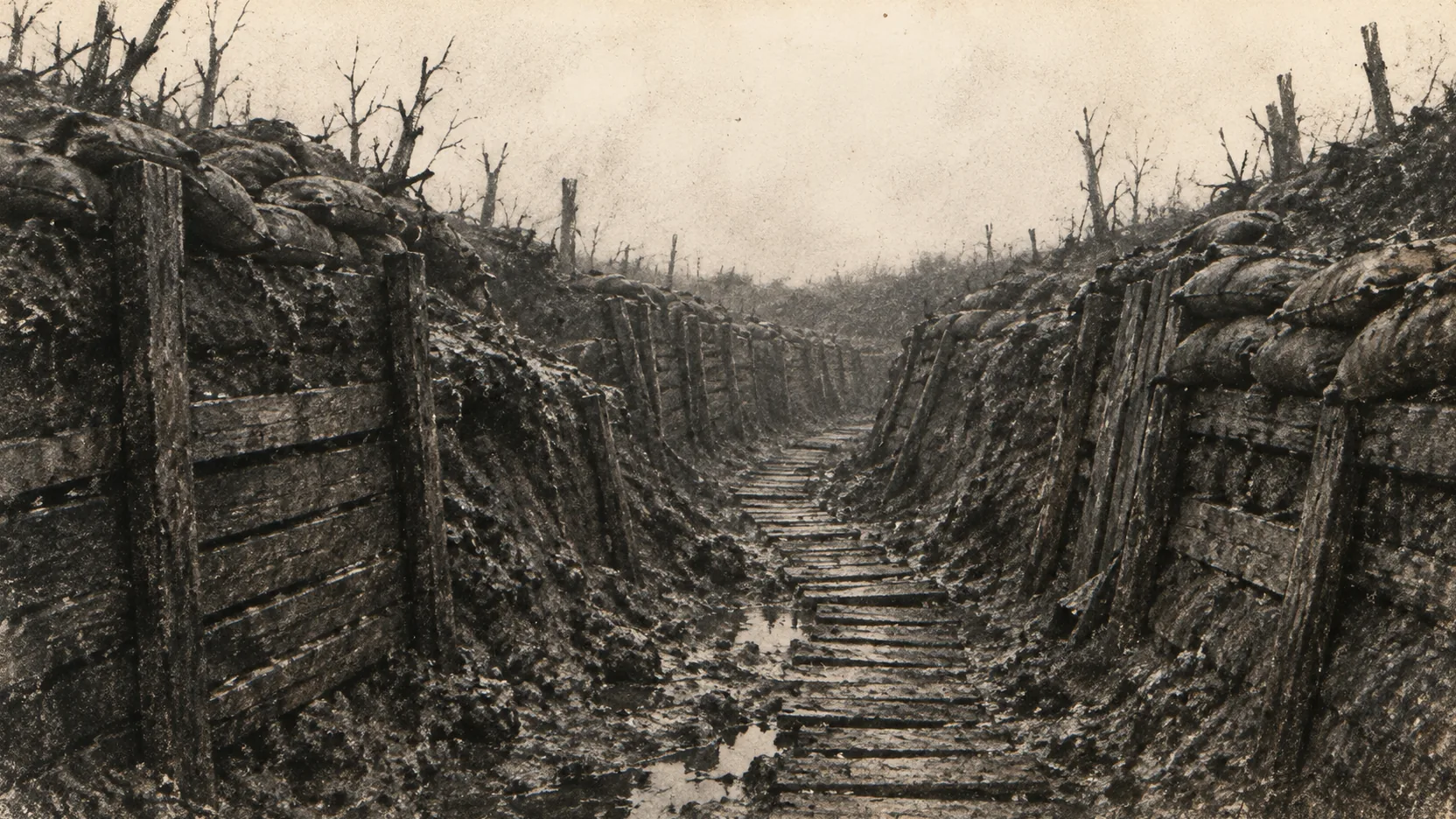
The assassination of the Austrian Archduke Franz Ferdinand of Austria-Este and his wife on 28.08.1914 in Sarajevo triggered a comprehensive military conflict in a Europe ripe for war, after all genuine and half-hearted attempts at conciliation had failed. Its course, characteristics, and especially the transformation of the German Imperial Army in this…

What would you like to explore?
29 contributions in the archive
Discover this collection
Current Contributions

Kriegsgeschichte
Prisoners - The Return of German Prisoners of War from Japan in the Years after 1918
Kiautschou Bay was taken into possession by the German Reich on November 14, 1897. Early on this area had been identified as a suitable trading base.

Organisation
The German Imperial Army in the World War - Structure, Organization and Uniforming of the Infantry - Reserve Infantry Regiments
In 1914 the German infantry comprised 217 regiments.

Heeressoziologie
Scenes of War - Training Behind the Front

Uniformierung & Ausrüstung
(German) Mountain Troops in World War I
For the special conditions of combat in the mountains, the following special formations were formed from the end of 1914 onwards - according to Jürgen Kraus:

Organisation
The Development of the German Imperial Army in World War I (1914–18) - An Overview
At the outbreak of World War I the Imperial Army comprised 92½ infantry and 11 cavalry divisions with 5,124 field guns and 575 heavy guns.

Organisation
The German Imperial Army in the World War - Structure and Organization - Fortification Troops
As early as mobilization, so-called fortification troops were planned. These were to carry out the necessary earthworks in the course of strengthening the fortresses.
Historical context
About this collection
This focus deals with the First World War (1914–18), which followed and indeed caused the collapse of the European order of 1914. The First World War is also referred to as the 'original catastrophe.' It had, at the very least, enormous consequences and changed not only the course of European history. Thus the Second World War was also a consequence of the unbalanced conditions of the so-called Peace Treaty of Versailles of 28.06.1919. According to Walther Hubatsch, the history of the modern world even begins with the First World War; Natali Ferguson speaks of a false war. John Keagan calls the First World War a European tragedy. The following, however, is only superficially about the course of the war and the political interpretation of this fundamental conflict; at the center of the subsequent text and image contributions are above all the characteristics of this war, the internal and external transformation, in particular of the German Imperial Army during this confrontation, as well as everyday life at the front, in the rear areas and at home. The latter should be documented above all by original, hitherto unpublished photographs.