
(German) Mountain Troops in World War I

For the special conditions of combat in the mountains, the following special formations were formed from the end of 1914 onwards - according to Jürgen Kraus:
in November 1914: the Bavarian Snowshoe Battalion No. 1,
in December 1914: the Snowshoe Battalion No. 2,
in May 1915: the Snowshoe Battalion No. 3 and
in May 1915: the Bavarian Snowshoe Battalion No. 4.
The latter was formed according to Kling (in the Vosges) from the 4th Company of the 1st Snowshoe Battalion, the replacement detachment and contributions from Bavarian Landwehr regiments.
In Munich there was the Snowshoe Replacement Detachment.
Of the Snowshoe Battalions I - IV, Battalions I and IV were Bavarian and Battalions II and III were Prussian.

The I. Snowshoe Battalion was formed on 14.11.1914 from volunteers of all branches and a number of skiers without prior military training. Among them were also many cavalrymen (Kling).
It initially consisted of 3 companies each with a machine-gun platoon. A 4th company was additionally formed and sent to the unit already deployed at the front in the Vosges.
According to v. Ramgo (p. 11) the battalion comprised: 27 officers, medical officers and officials, 619 non-commissioned officers of all ranks and enlisted men, as well as 91 horses and pack animals.
Cooking boxes were procured for the pack animals.
Furthermore, two-wheeled carts — each drawn by two mules — were used.

The II. Snowshoe Battalion was also formed in Munich. Apart from the staff it consisted of 6 companies each with a machine-gun platoon. From February 1915 the unit was deployed partly in Courland and partly in the Carpathians.
Each company had a company commander, a company doctor and 3 troops. The troops were numbered consecutively from 1 to 18 within the battalion.
Each troop consisted of a mounted officer, 1 deputy sergeant major (Vizefeldwebel), 7 senior Jäger, 48 riflemen, 1 MG platoon leader, 12 MG gunners (including two rifle handlers), 2 MG drivers, 5 baggage drivers, 1 medical non-commissioned officer and 2 stretcher-bearers.
The combat baggage consisted of 2 ammunition carts for the riflemen and the MG platoon, 1 medical cart and 1 field kitchen.
The large baggage included 1 provisions cart, 1 food cart and 1 pack and feed cart.


In March 1915 the existing snowshoe battalions were reorganized at Lechfeld and consolidated into Jäger Regiment No. 3. It consisted — besides the staff — of four battalions.
From July 1915 all four battalions were to have the following identical strengths:
21 officers, 896 men, 136 horses including 42 pack animals,
additionally in the three mountain MG platoons
3 officers, 117 men, 51 horses including 48 pack animals.
Jäger Regiment No. 3 was assigned to the Alpine Corps.
The reason was Italy's entry into the war as an enemy of the Central Powers.


As early as October 1914, the Württemberg War Ministry was presented with the proposal to form a Württemberg volunteer ski corps.
As a result (order of 19.11.1914) the Württemberg Snowshoe Company was formed (renamed Mountain Company in March 1915). This remained independent after the consolidation of the snowshoe battalions into Jäger Regiment No. 3 and was later expanded into a Württemberg Mountain Regiment (May 1918).
On 28.11.1914 a mountain machine-gun platoon with three heavy MGs was formed; in 1915 two further platoons were established.
The Württemberg snow skiers were mentioned for the first time in the army report on 05.02.1915.

The snowshoe and mountain troops wore special clothing adapted to the particular conditions of mountain combat.
Characteristic for the snowshoe troops was above all their headgear.
This snowshoe cap resembled the Austrian cap.
It was made of light gray cloth and had a green top flap.
The flap was held by buttons made of stag horn.
The state and imperial cockade was worn on the cap (front or side).
The peak of the cap was field gray.
Jäger Regiment No. 3 initially kept the snowshoe cap, later received shakos (end of 1915) and subsequently (from July 1916) helmets.
Losses: 2,300 officers, senior Jäger and Jäger.

Also worn were the (field-gray) snowshoe litewka, wide-cut trousers, gaiters (wraparound gaiters) and special mountain shoes or ski boots.
On the field-gray collar patches on the turn-down collar of the snowshoe litewka there was a green embroidered S and the battalion number.
The litewka had two large patch breast pockets with a pinch pleat as well as slanted side pockets. At the end of the sleeve there were tabs with three buttons.
The litewka was later replaced by the field coat or the gray-green blouse.

The trousers were cut extra wide to allow freedom of movement.
The additional gray winter suit consisted of a jacket and trousers and could also be worn outside, showing the white lining. In this case the caps received a white cover.
The equipment also included light backpacks (instead of haversacks) and mountain poles.
Carbines served as weapons.
With the intended deployment of the II. Snowshoe Battalion predominantly in the Carpathians, the ski equipment had to be changed, i.e., 600 pairs of shorter snowshoes were procured at short notice.

Württemberg Mountain Jägers


The Württemberg mountain battalion had some distinctive uniform features.
On the collar of the litewka there were (green) flaps with a company number button.
The litewka with patch breast pockets and slanted side pockets had shoulder rolls designed to prevent the shoulder straps of the backpacks from slipping down.
On the collar of the litewka of the senior Jäger a (gold) braid together with the company number button was worn.

Original photo series of the 1st Snowshoe Battalion in combat training in Bayrischzell.


Original photo series showing the snowshoe troops from 1915. Photographer: Johann Stock/ Munich.


Sources
Hettler, Formationsgeschichte und Uniformierung des Königlich Württembergischen Gebirgs-Regiment, in: Zeitschrift für Heereskunde, 1934, p. 15 ff.
Kling, Hans, Die Jäger und Schützen (including Bavaria) and the Württemberg Mountain Regiment, in: Zeitschrift für Heereskunde, 1962, p. 13 ff.
Jürgen Kraus, Die feldgraue Uniformierung des deutschen Heeres 1907 - 1918 in zwei Bänden, Osnabrück 1999.
Jürgen Kraus, Die deutsche Armee im Ersten Weltkrieg, Vienna 2004.
Rango, Ralf v., Das Jäger-Regiment Nr. 3, According to the official war diaries and reports from comrades-in-arms, Munich 1929.
Recommended Articles

Organisation
The German Imperial Army in the World War - Structure and Organization - Airshipmen
Airshipmen on the Western Front. Original photo from the year 1916. Photographer: G. Gramsch/Dresden.

Organisation
The German Imperial Army in the World War - Structure, Organization and Uniforming of the Infantry - Reserve Infantry Regiments
In 1914 the German infantry comprised 217 regiments.

Kriegsgeschichte
Scenes of War - Trench Warfare - Firing pits and trenches.
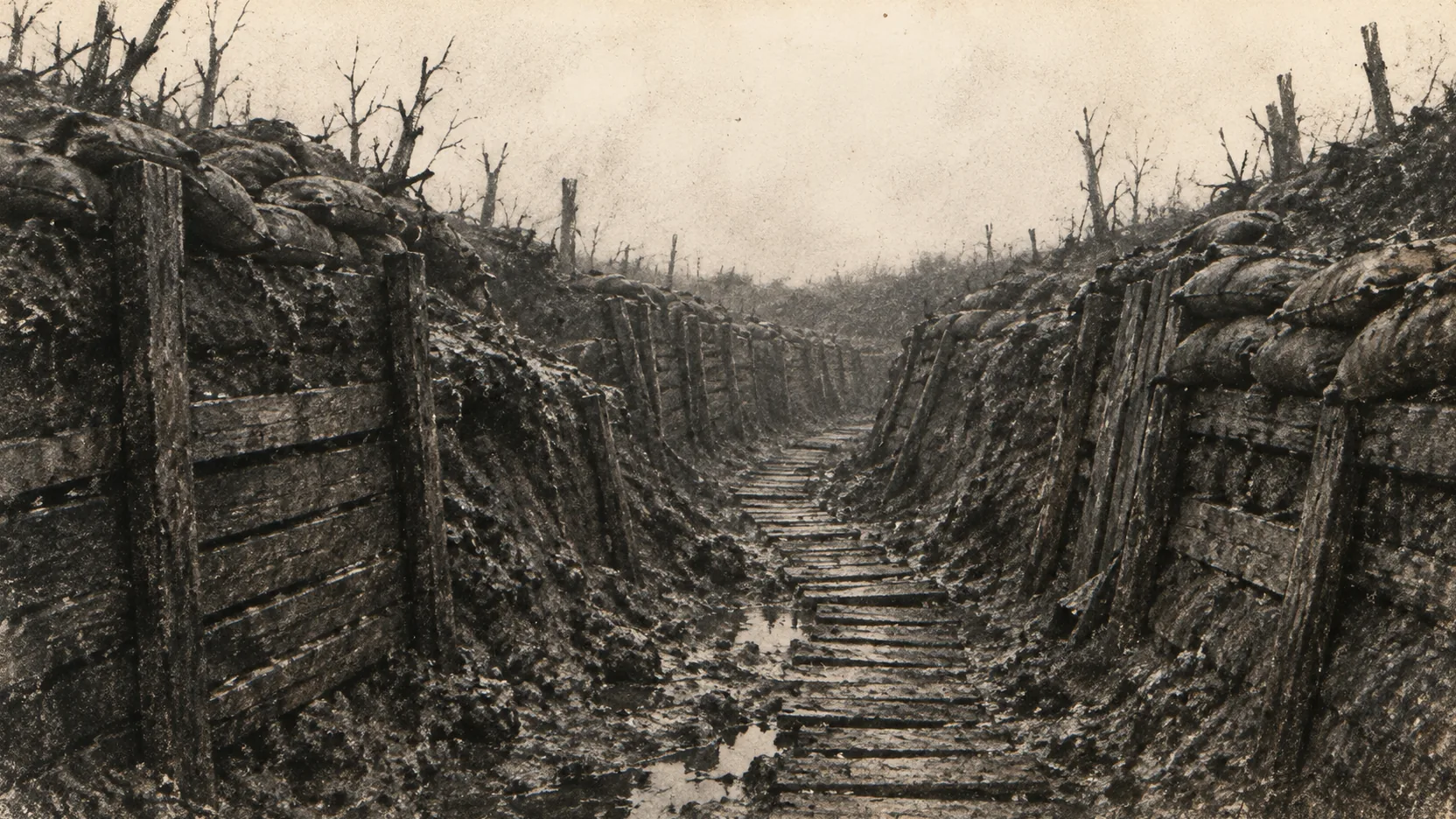
Whereas a firing pit generally served only one, or at most two, soldiers to protect against enemy action, a trench was a massive form of a sunken field fortification with a firing passage amid forward and rear cover to enable secure firing and protection against bombardment, e.g. by shells.