

Uniformierung & Ausrüstung
The Dessau Specification of 1737
Below is an original photo series of the Dessau Specification 1737, which is in the possession of the author.
Army studies · 17th to 20th century
Uniforms, images and stories: Discover military dress from the 17th century to the First World War — based on historical sources from a private archive.
Uniforms. People. History.

Explore the archive
Six focal points. Different perspectives on military clothing and its era.
Insights into the collection
An image, a document, a story. Selected approaches to our archive.
Uniformierung & Ausrüstung
Below is an original photo series of the Dessau Specification 1737, which is in the possession of the author.

Kriegsgeschichte
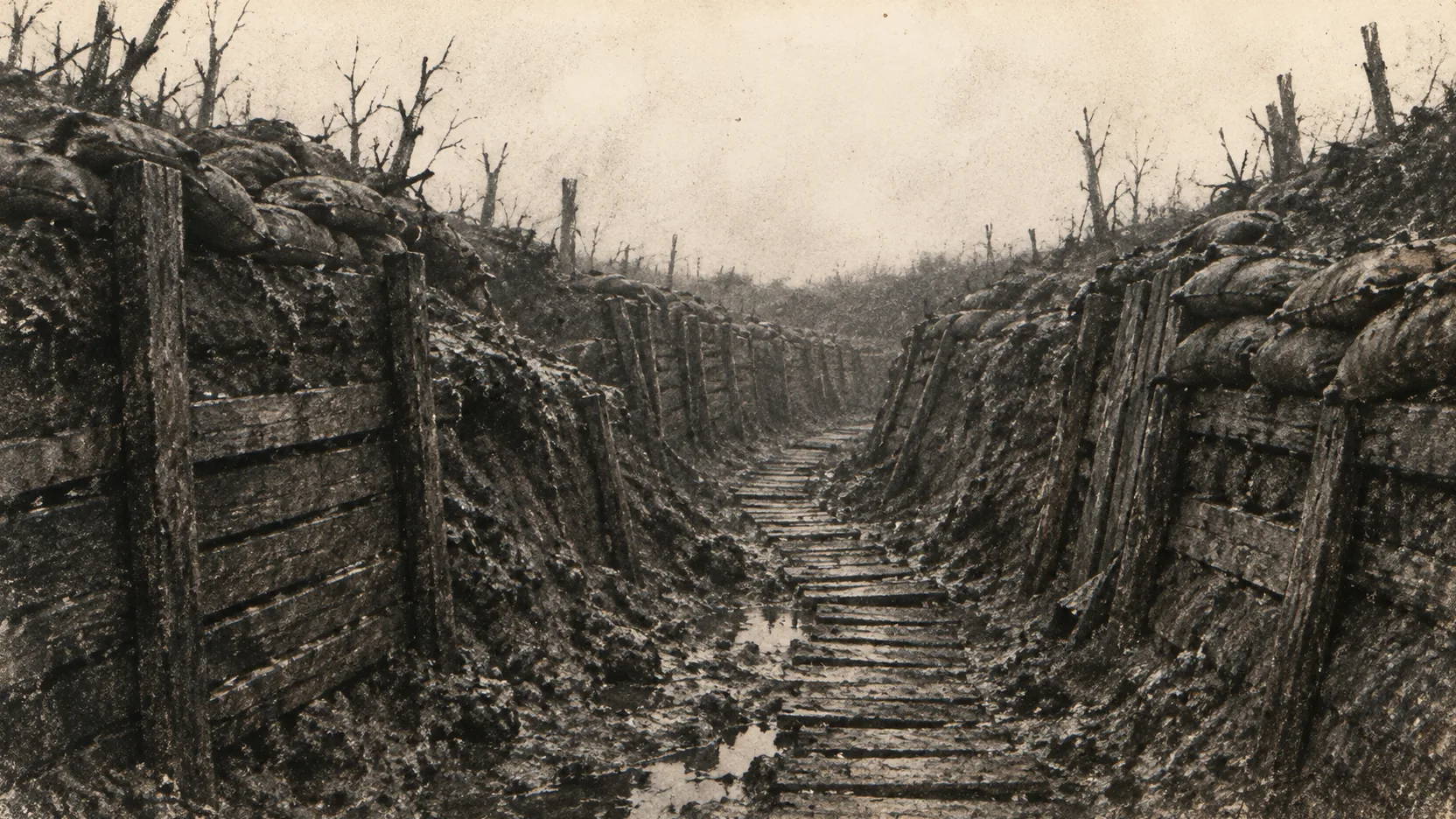
The Marine Corps Flanders - often referred to as the Flanders Corps - was a unique large formation of the Imperial Navy in World War I that combined land, sea, and air forces under a single command. It secured the Belgian coast from 1914 to 1918, operated in the English Channel and fought as infantry on the Western Front.

Uniformierung & Ausrüstung
This article presents the copperplate series described below of the Prussian army in the year 1759. The depiction is based on an original reproducing photo series presumably from the eighties (probably made by Otto Quenstedt). This is in the possession of the author.
The archive grows

Organisation
The following outlines the development of the military in the prince-bishopric in the 18th century up to its dissolution at the beginning of the 19th century; at the same time it also presents the conditions in Münster as a garrison town.

Uniformierung & Ausrüstung
Below the evolution of the Bavarian uniform over the centuries is presented and illustrated with rare lithographs and original drawings.

Kriegsgeschichte
Original photo collection, probably of a deck petty officer of SMS Victoria Louise.
Kriegsgeschichte
The Marine Corps Flanders - often referred to as the Flanders Corps - was a unique large formation of the Imperial Navy in World War I that combined land, sea, and air forces under a single command. It secured the Belgian coast from 1914 to 1918, operated in the English Channel and fought as infantry on the Western Front.
Uniformierung & Ausrüstung
Below is an original photo series of the Dessau Specification 1737, which is in the possession of the author.
Uniformierung & Ausrüstung
This article presents the copperplate series described below of the Prussian army in the year 1759. The depiction is based on an original reproducing photo series presumably from the eighties (probably made by Otto Quenstedt). This is in the possession of the author.
Preserve. Contextualize. Understand.
This archive is dedicated to army studies and to a critical culture of remembrance.
This website is devoted to army studies and, in the first place, to the history of military dress from the emergence of standing armies in the 17th century. It is therefore primarily concerned with the description of soldiers' clothing, equipment, and armament over time in the sense of a critical culture of remembrance.
The uniform, as a standardized dress for a socially demarcated group of people, on the one hand has a close relationship to civilian fashion through mutual influence; on the other hand it also has economic aspects and symbolic significance. When considering the development of uniforms, one must therefore take into account a variety of functional, fashionable, technical, political and traditional reasons, and, overall, the military with its sociological and societal connections.
The aim here is to present an account based on as original or contemporary sources as possible, that is, visual evidence of the respective period, e.g. copper engravings, lithographs, etchings, photographs (from around 1860), documents (regulations, descriptions in memoirs, letters, etc.) and, of course, surviving artifacts, as well as secondary sources such as later uniform depictions in the form of watercolors, drawings, etc. and printed illustrations that have become rare. In this context the website — following the author's inclinations — is divided into various focal points and is based exclusively on his archive.