
Explore the archive
Focus Areas
In this context, the website—reflecting the author's interests—is divided into several focus areas and is based solely on his archive.

Military Clothing Through the Ages
-

1648 - 1870/71
The Prussian Army
The history of the Brandenburg-Prussian army is a significant chapter in the history of the German armed forces. Its nominal strength and military effectiveness were prerequisites for the rise of the Prussian state among the European great powers and for a long time established the Prussian-Austrian dualism. The following focuses on the organizational and uniform history of the Brandenburg-Prussian army.
84 contributions -

1789 - 1815
The French Army
What did the soldiers of the French army look like in the Revolutionary Wars and the Napoleonic Wars? In this era the history of military uniform essentially reached a peak of splendor and elegance. After the French army, under Napoleon's brilliant leadership, had conquered almost all of Europe, most of the uniforms of other armies also followed the French model. The outward appearance of the French army, including its various foreign troops, is covered here.
0 contributions -

From the collection
Münster as a Garrison
Münster as a garrison through the ages is the subject of this focus. The following account ranges from the medieval city fortress, through Münster as an important military site of the Prince-Bishopric of Münster (1672 - 1803) and—after a Napoleonic or French intermezzo—up to the role of the city of Münster as the military center of the Prussian province of Westphalia.
14 contributions -

1871 - 1914
The German Imperial Army
The Reichsheer refers to the land forces of the German Empire. It consisted primarily of the Prussian army and the contingents of the other federal states incorporated into it. The Bavarian, Saxon and Württemberg militaries had a special status and their own institutions. This section presents the organization and structure and, in particular, the varied and tradition-driven outward appearance of the German Reichsheer. In addition, the Imperial Navy, including the colonial Schutztruppen, is covered.
88 contributions -

1914 - 18
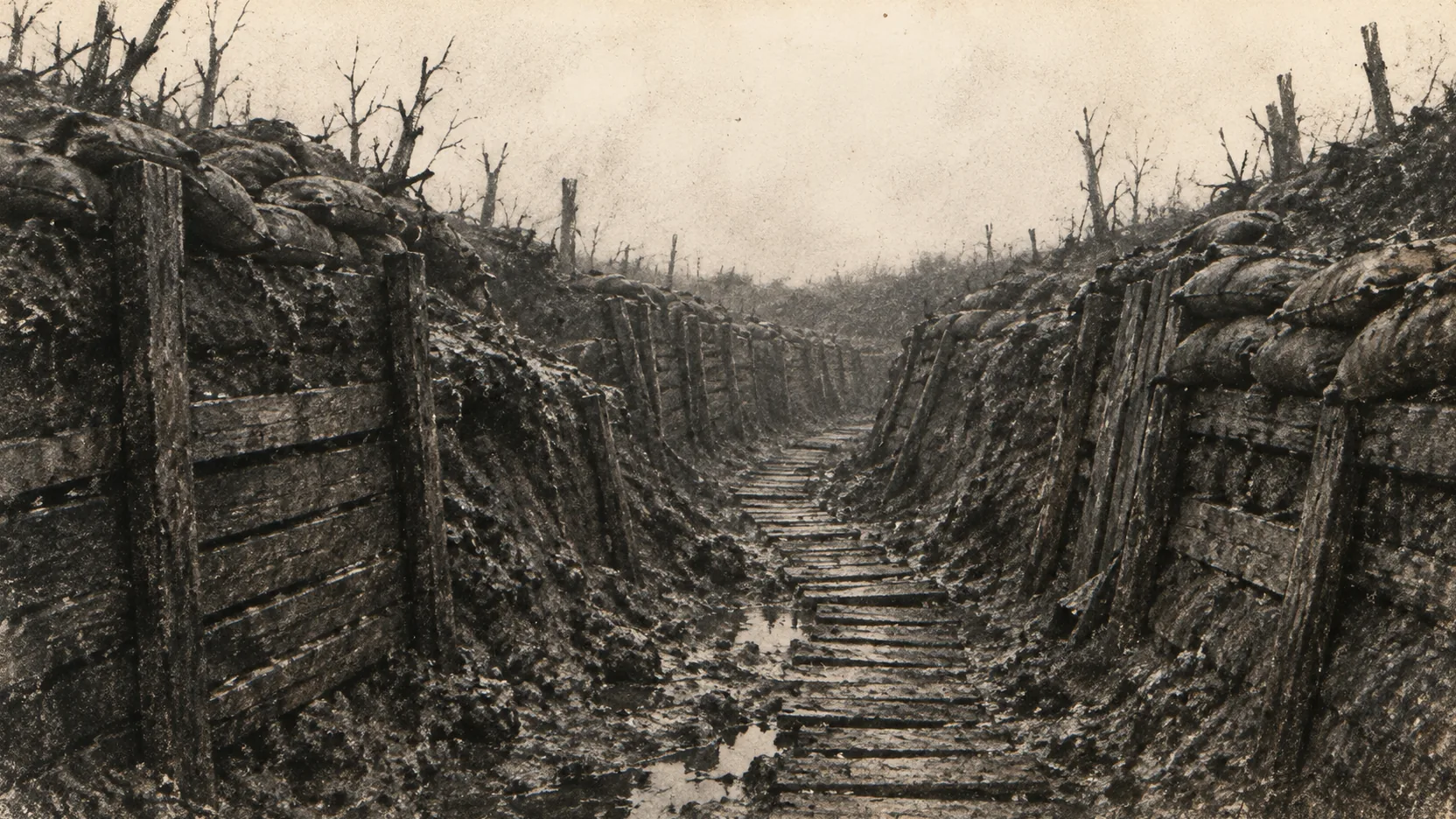
The First World War
The assassination of the Austrian Archduke Franz Ferdinand of Austria-Este and his wife on 28.08.1914 in Sarajevo triggered a comprehensive military conflict in a Europe ripe for war, after all genuine and half-hearted attempts at conciliation had failed. Its course, characteristics, and especially the transformation of the German Imperial Army in this conflict are presented here.
29 contributions -

From the collection
History of Military Uniforms
The history of the development of the uniform is closely linked to the emergence of standing armies. After the Thirty Years' War (1618–48), in the further course of the 17th century the troops that had previously been recruited or raised on an ad hoc basis were thereafter maintained even in peacetime and bound to the respective sovereign by long-term contracts. Precursors of standing armies already existed in antiquity and in the early modern period. A particular visual feature of this fundamental change in military history was the introduction of the uniform as military clothing precisely defined by regulation. Its history — including its interaction with civilian fashion — is treated here. This section also brings together all contributions that cannot be clearly assigned to one of the other focal topics, for example if they take a more general approach or cover a larger period of time.
29 contributions