
Archive for this collection
Explore articles
29 contributions in the archive
Loading results …
The results could not be loaded. Please try again.
3 articles found

Heeressoziologie
Scenes of War - Training Behind the Front

Heeressoziologie
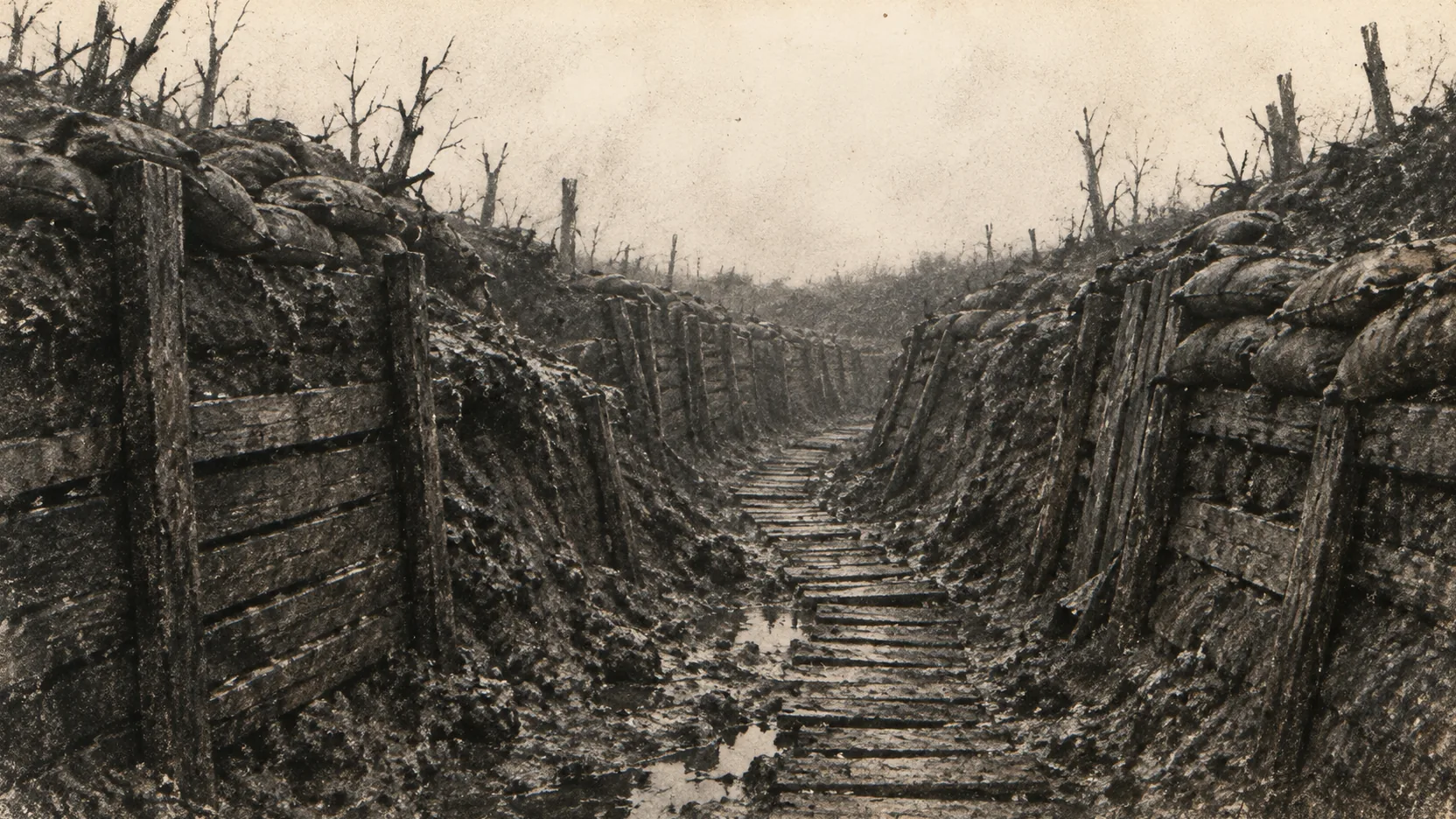
Scenes of War - Crater Landscape
For years, both the Central Powers and the Allies tried to break the stalemated fronts by an ever-increasing use of artillery and the corresponding consumption of ammunition. As a result, gigantic battles of materiel shaped conditions especially on the Western Front, while on the Eastern Front certain elements of maneuver warfare persisted.

Heeressoziologie
Scenes of War - Hygiene
In peacetime, medical and nursing care was the responsibility of the medical officers, who were supported by orderlies. To prevent contagious diseases as far as possible, the living quarters in the barracks had to be inspected regularly, as did the drinking water and the food supplies. The troops were to be examined for their fitness before the start of longer marches – e.g., during maneuvers. The barracks had regimental sickrooms, and there were military hospitals in the garrisons. Convalescent homes were established for non-commissioned officers and enlisted men in the various army corps. Wartime brought different conditions, yet the medical service of the German army was comparatively advanced. From 1914–18 comparatively few German soldiers fell victim to epidemics; in the war it is said that 21 German soldiers died of smallpox, 11723 of typhus, 8646 of dysentery, 1693 of cholera, 452 of malaria, 999 of influenza, and 1345 of typhus exanthematicus (spotted fever).