
Scenes of War - Hygiene
In peacetime, medical and nursing care was the responsibility of the medical officers, who were supported by orderlies. To prevent contagious diseases as far as possible, the living quarters in the barracks had to be inspected regularly, as did the drinking water and the food supplies. The troops were to be examined for their fitness before the start of longer marches – e.g., during maneuvers. The barracks had regimental sickrooms, and there were military hospitals in the garrisons. Convalescent homes were established for non-commissioned officers and enlisted men in the various army corps. Wartime brought different conditions, yet the medical service of the German army was comparatively advanced. From 1914–18 comparatively few German soldiers fell victim to epidemics; in the war it is said that 21 German soldiers died of smallpox, 11723 of typhus, 8646 of dysentery, 1693 of cholera, 452 of malaria, 999 of influenza, and 1345 of typhus exanthematicus (spotted fever).


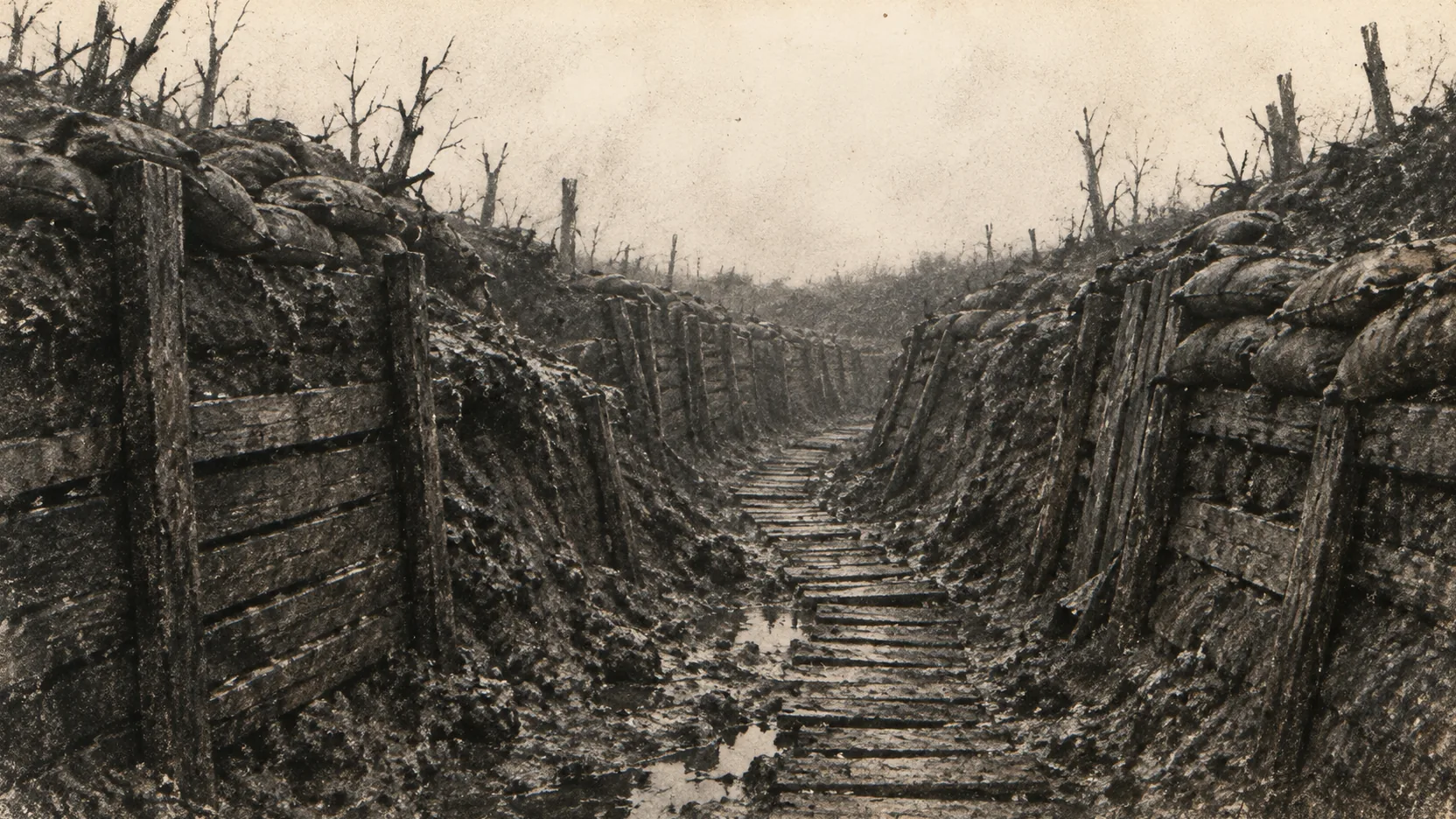
In the cramped conditions of the trench, not only the constant damp but also the rats and the lice were problematic. At this point a quotation follows from perhaps the best-known novel about the First World War: All Quiet on the Western Front: "It is troublesome to kill a single louse when you have hundreds. The creatures are rather tough, and the endless pinching with the fingernails grows tedious. Tjaden has therefore attached the lid of a shoe-polish tin with wire over a burning stub of a candle. The lice are simply thrown into this little pan — it crackles, and they are done for. We sit around it, shirts on our knees, upper bodies bare in the warm air, hands at work. Haie has a particularly fine breed of lice: they have a red cross on the head. That is why he claims to have brought them from the hospital in Thourhout; they were from a senior medical officer personally. He also wants to use the fat slowly collecting in the tin lid to grease his boots and laughs for half an hour at his joke" (Edition Ulm/Donau, p. 1975). The author himself was a participant in the war.

On the rat plague the aforementioned novel contains the following passage: "We have to take care of our bread. The rats have multiplied a great deal lately, since the trenches are no longer in order. The rats here are particularly repulsive because they are so large. They are the sort one calls corpse rats. They have hideous, vicious, naked faces, and one feels sick when one sees their long, bare tails. They seem rather hungry. They have bitten at the bread in almost all cases. Kropp has it wrapped tightly under his head in the groundsheet, yet he cannot sleep because they run over his face to get at it. Detering wanted to be clever; he had fastened a thin wire to the ceiling and hung his bundle of bread on it. When he flicks his torch on at night, he sees the wire sway. On the bread rides a fat rat.
At last we put an end to it. We carefully cut out the pieces of bread that the animals have nibbled; we cannot throw the bread away in any case, because otherwise we will have nothing to eat tomorrow. We place the cut slices together in the middle on the ground. Each of us takes out his entrenching tool and gets ready to strike. Detering, Kropp and Kat hold their flashlights ready.
After a few minutes we hear the first shuffling and tugging. It grows stronger; now there are many little feet. Then the flashlights are switched on, and everyone strikes at the black heap, which hisses apart. The success is good. We shovel the rat parts over the edge of the trench and lie in wait again.
A few more times we manage the blow. Then the animals have noticed something or have smelled the blood. They do not come any more. Nevertheless, the remaining bread on the ground is taken by them the next day...." (p..77).


Recommended Articles

Kriegsgeschichte
Prisoners - The Return of German Prisoners of War from Japan in the Years after 1918
Kiautschou Bay was taken into possession by the German Reich on November 14, 1897. Early on this area had been identified as a suitable trading base.

Kriegsgeschichte
Scenes of War - German Tanks
Regarding the world's first tank battle, Thomas Weißbrich of the German Historical Museum (Berlin) reports the following: "It took place on April 24, 1918, between three British Mark IVs and three German A7Vs at Villers-Bretonneux. During the course of the fight two British and one German tank were damaged and put out of action. Although the German infantry managed to take the contested location, Australian troops recaptured it shortly thereafter."

Organisation
The German Imperial Army in the World War - Structure and Organization - Military Chaplains
Even in peacetime religious care was provided.