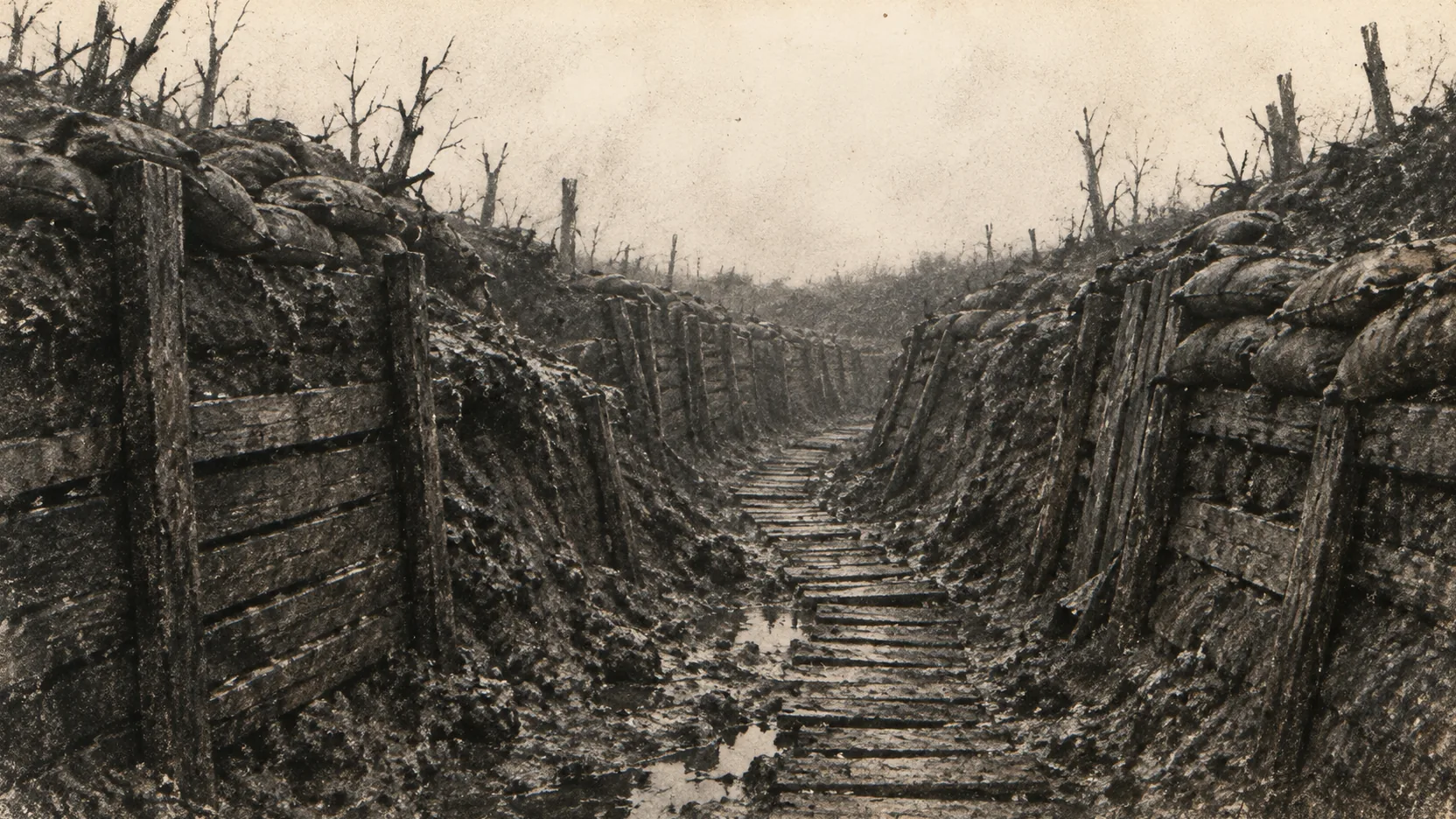

Scenes of War - German Soldiers in Palestine.
Work in progress.

Little known is that the German Empire not only provided its ally Turkey with material assistance in the form of arms deliveries, but that German troops also fought on the territory of the Ottoman Empire - in Palestine - amounting to a total of about 25,000 men.

"The Palestine front or Sinai front was a secondary theater of war during the First World War. From 1915 to 1918 the troops of the British Empire and the Central Powers, which consisted of the Ottoman Army, the German Asia Corps and Austro-Hungarian units, faced each other in eventful battles" (Source: Wikipedia).

Background according to Walter Hubatsch, Germany in the World War 1914 - 1918, Ulm 1966, pp. 74 ff..
"The situation in the Balkans also had to be resolved. The Porte had indeed already raised an offer of alliance against Russia in Berlin on 28 July 1914 and signed a secret treaty of alliance with the German Reich on 2 August 1914. However, at that time an antagonism with England had not yet been taken into account, so that the Porte, weakened by past wars and internal turmoil, initially declared its neutrality. The arrival of the two German cruisers 'Goeben' and 'Breslau' in the Golden Horn and their formal transfer into Turkish service then so heightened Turkey's tension toward the Entente that English naval forces at the end of September prevented a Turkish torpedo boat from leaving the straits. Thereupon the Turkish government closed the Dardanelles. Despite internal tensions, the Young Turk party under Enver Pasha was willing to oppose Russia's possession of the straits by force."

The German Asia Corps. Formation and organization. Pasha I.
"Organization Pasha I
MG-Battalion 601
MG-Battalion 602
MG-Battalion 604
MG-Battalion 606
MG-Battalion 607
Flak Platoon 28
Flak Platoon 133
Flak Platoon 136
Flak Platoon 142
Flak Platoon 172
Foot Artillery Battalion 60
Portable Radio Station 2 and 4
Aviation Detachments 300 "Pasha", 301 and 302 (formed at Aviation Replacement Detachment Breslau-Brieg), 303 (FEA Altenburg), 304 b (FEA 1 b Oberschleißheim) and 305 (FEA Breslau), from 1918 Fighter Squadron 55 (later renamed Fighter Squadron 1 F)
Staff Officer of the Railway Troops No. 25 with 3 companies
Drilling Special Commands
5 Railway Special Commands
3 Truck Columns"
Source: Wikipedia.

The German Asia Corps. Formation and organization. Pasha II.
"Pasha II consisted, among others, of the staff of the 201st Infantry Brigade under the command of Colonel Gustav von Oppen and was attached to the Asia Corps.
Organization at the end of 1917[2]
Infantry Battalion 701
Infantry Battalion 702
Infantry Battalion 703
Artillery Detachment 701
Flak Battery 15
Pioneer Company 701
MG Detachment Hentig
Army Signals Commander 70
In addition, in 1917/18 the Fortress Railway Construction Company 11 and the Railway Operations Company 44/48 were deployed on the Hejaz Railway.
Commander-in-chief of the Asia Corps was initially Major General Friedrich Freiherr Kreß von Kressenstein (1870–1948) as commander of the 1st Turkish Expeditionary Corps and later commander of the Gaza front".
Source: Wikipedia.


"Organization of Pasha II in spring 1918:
Staff of the 201st Infantry Brigade
1st Masurian Infantry Regiment No. 146 from Allenstein under Lieutenant Colonel Frithjof von Hammerstein-Gesmold
Pioneer Company 205
Mountain MG Detachment 201
Mountain MG Detachment 203
Mountain MG Detachment 207
Mountain MG Detachment 208
Reserve Jäger Battalion 11 from Marburg
Mountain Artillery Detachment 1
7./Foot Artillery Regiment 2
7./Foot Artillery Regiment 9
Flak Platoon 120
Mountain Signals Detachment
Signal Platoon 1720
Signal Platoon 1731
Light Signal Platoon 27
Light Signal Platoon 28
Telegraph Detachment "Little Asia"
Source: Wikipedia.

Asia Corps. Deployment.
Text

Asia Corps. Fate.
Text


Uniform-related peculiarities.
The German troops deployed in the Near East wore special clothing adapted to the local climatic conditions. Camels were also used.


Recommended Articles

Kriegsgeschichte
Scenes of War - Rail Transport
The railway played a decisive role in the First World War. Without the developed rail network the rapid mobilization of the (seven) German armies in the West would not have been possible. But a powerful rail system was also indispensable for rapid troop movements. Already in the run-up to the Franco-Prussian War of 1870/71 the German General Staff had recognized the decisive importance of the railway. In 1914 there were already15 bridges over the Rhine between Strasbourg and Wesel. In addition to the classic rail network, branch lines or light railways also assumed an important role during the course of the war, especially in the front area. To do justice to the strategic role of the railway, at the beginning of the war the various railway administrations were merged and placed under a central military command.

Organisation
The German Imperial Army in the World War - Structure and Organization - Airshipmen
Airshipmen on the Western Front. Original photo from the year 1916. Photographer: G. Gramsch/Dresden.

Kriegsgeschichte
Scenes of War - Tethered Balloon
The use of balloons on the battlefield was already practiced during the Revolutionary Wars.