
The Course of the First World War (1915)
The War Year 1915
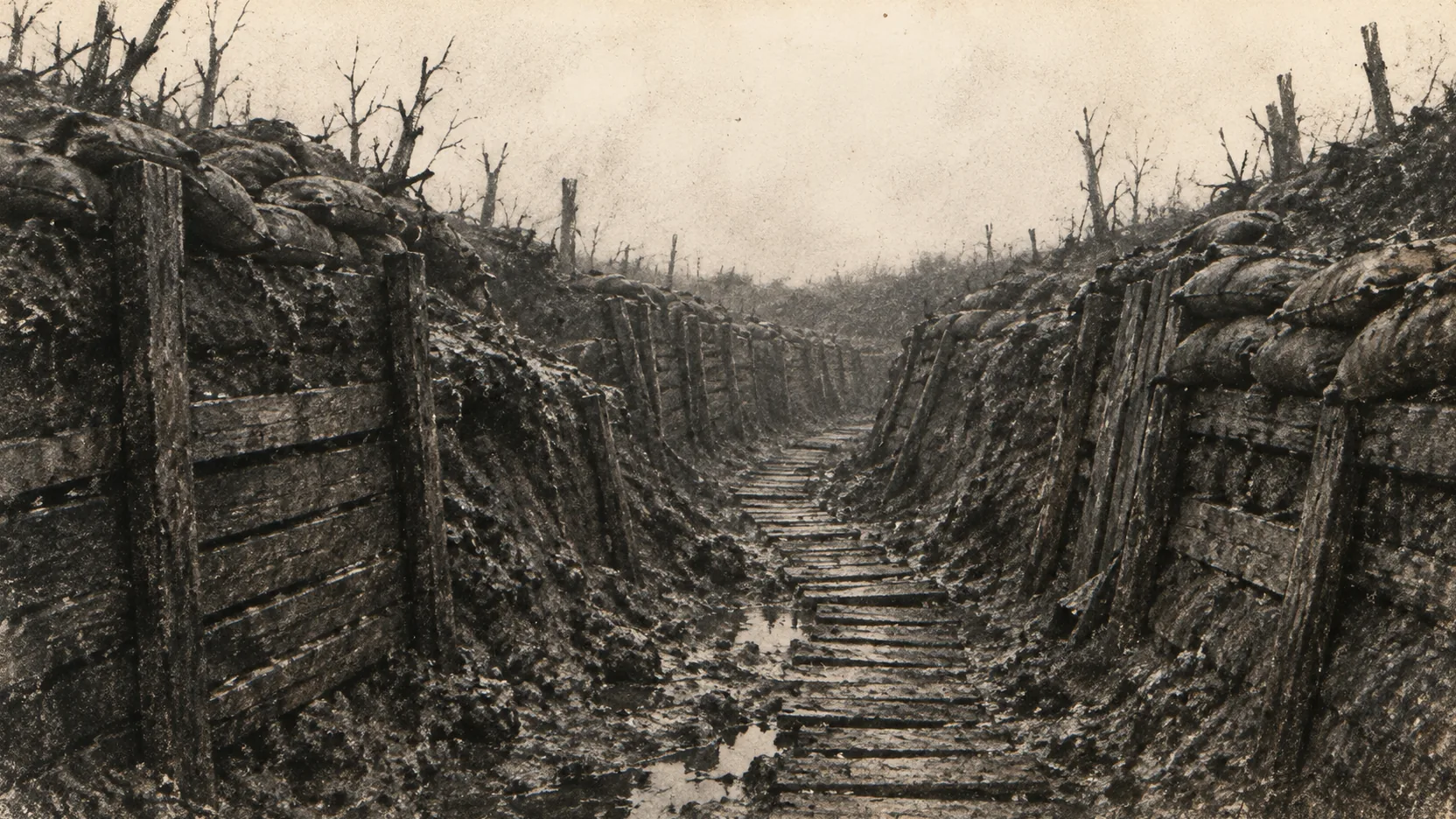
On 16 February 1915 the French High Command ordered a renewal of the offensive in the Champagne. For the first time, hours of artillery fire prepared the infantry attacks, which nevertheless failed against the strong defensive power of the German positions. The French lost about 240,000 men, the Germans only 45,000. The British offensive at Artois beginning on 10 March also failed. The Germans remained on the defensive in the West and concentrated on further expanding their positions. Up to then these had lacked tactical depth; a second and third line were now created. It remained problematic that on both sides each main battle line was absolutely to be held in the event of enemy attacks. This rigid doctrine led to senseless losses; only slowly did the leading military commanders realize that both the classical form of attack and an overly rigid defensive posture did not lead to success or led to unacceptable losses.


In particular, the Allies had to recognize during the breakthrough attempts on the Western Front in the spring and up to the summer of 1915, despite a large expenditure of men and materiel, that previous offensive strategies no longer met the requirements of modern positional warfare. Thus the slight territorial gains achieved in the major offensive at La Bassée (from 10 March), in the so-called Battle of Loretto, and in the simultaneous Franco-British major offensive in the Champagne and the Artois (from 25 September) did not justify the enormous losses.

On 1 November the Allies therefore called off the major offensive. They also tried to pursue new paths: the British began mining enemy positions. Furthermore, the heavy defeats prompted the Allies to develop prototypes of the later tank, called 'tank' for reasons of secrecy. However, it was a long way before series production could be started.

The Germans also pinned their hopes on a new weapon: from October 1915 preparations were underway for the first poison gas attack in the history of warfare. This was carried out on 22 April 1915 by a specially formed gas regiment (Pioneer Regiment No. 31) at Ypres. In this so-called "Black Day of Ypres" the Allies lost 15,000 men, i.e., the gas attack was a complete success. However, the German High Command had failed to keep sufficient reserves ready for a breakthrough; they apparently did not trust the optimistic predictions associated with the new weapon. A repeat gas attack at Ypres on 2 May 1915 also did not break the enemy front. The opponent now adapted to the new weapon; on both sides rudimentary protective measures were initially procured, and the highly wind-dependent use of poison gas also proved to be risky for one’s own troops. Regardless of this, gas cloud attacks and later shelling with poison gas shells became part of everyday wartime life.

Recommended Articles

Organisation
The German Imperial Army in the World War - Structure, Organization and Uniforming of the Infantry - Reserve Infantry Regiments
In 1914 the German infantry comprised 217 regiments.

Uniformierung & Ausrüstung
(German) Mountain Troops in World War I
For the special conditions of combat in the mountains, the following special formations were formed from the end of 1914 onwards - according to Jürgen Kraus:

Kriegsgeschichte
Prisoners - The Return of German Prisoners of War from Japan in the Years after 1918
Kiautschou Bay was taken into possession by the German Reich on November 14, 1897. Early on this area had been identified as a suitable trading base.