
Scenes of War - Soldiers' Provisions

The German army in the field had an enormous need for provisions; the weekly requirement for staple foods was reported as follows: 27,085,000 kg of bread, 59,485,000 kg of potatoes, 7,913,500 kg of meat, as well as 904,600 kg of salt, 614,800 kg of sugar and 900,600 kg of coffee. In addition there was demand for fat, oats, hay and straw. Analogous to the nutrition and supply problems at home — where rationing of all important foods had already begun in autumn 1915 — the supply base at the front also became increasingly meager.


The Alsatian infantryman Dominik Richert reports from his service in Infantry Regiment No. 332 in the East in 1917: "Suddenly there was only 1 pound of bread per man per day instead of the previous 1 1/2. In Germany and the conquered territories the stock of food had been taken inventory of; it turned out that the bread could not possibly last until the new harvest. Therefore half a pound was deducted from us daily. We had not seen potatoes at all for 4 months, and even less had we been able to eat, because the potato harvest in autumn 1916 had been very bad. Gradually such hunger set in among all the soldiers that no one knew how to cope. The rations consisted in the morning and evening of poor black coffee, brewed from coffee substitute, without sugar, 1 pound of bread per day, which everyone would eat immediately in the morning with the coffee. Then there was alternately butter, jam or a liver sausage, a gray fat called "Affenfett", but only a few grams per head — enough to feed a young cat, but not young, starving soldiers. There were now three meatless days per week. The midday meal consisted of 1 liter of thin soup, mainly semolina or dried vegetable soup." (Beste Gelegenheit zum Sterben, pp. 242/243).


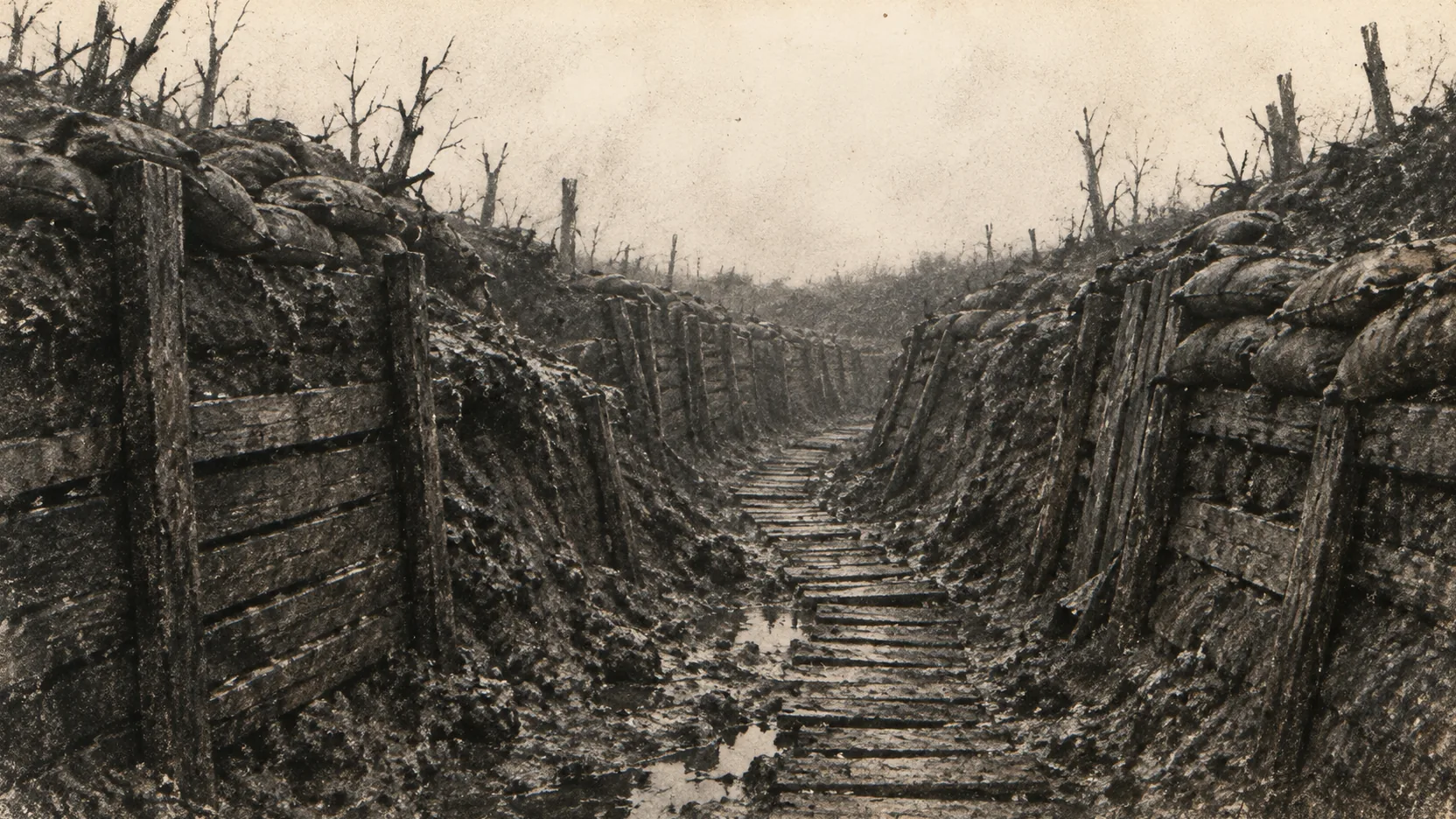
On the supply situation in the field Schulz reports in his regimental history of the Infantry Regiment Graf Bülow von Dennewitz (6th Westphalian) No. 55 in the World War (Detmold 1928) as follows: "In general there was lively activity in the trenches in the evening hours, caused by bringing up and distributing building materials, by the fetching of food and the work to be done in the darkness. It was calmer in the morning hours when material transport and night work were finished. The main meal of the day, coffee and tea, were prepared in the field kitchens of the billets. The field kitchens moved forward at dusk to Ligny le Petit and there handed out the portions to those fetching the food. Since bringing the food in the men's cooking utensils was cumbersome and arduous and required numerous carriers, larger kettles had been procured over time. The food stayed warm in them for a longer time. A few carriers were also sufficient. Nevertheless chimneys also smoked in the position, for coffee and tea had to be reheated during the day, and many a gray-clad soldier prepared a special dish to his taste from the supplied food and from ingredients he bought in the canteen" (p. 120).


Recommended Articles

Kriegsgeschichte
Scenes of War - Trench Warfare - Firing pits and trenches.
Whereas a firing pit generally served only one, or at most two, soldiers to protect against enemy action, a trench was a massive form of a sunken field fortification with a firing passage amid forward and rear cover to enable secure firing and protection against bombardment, e.g. by shells.

Kriegsgeschichte
Scenes of War - Marches
Figure above: Soldiers on the march. Photo: W. Braemer/ Berlin. Around 1914/15.

Heeressoziologie
Scenes of War - Hygiene
In peacetime, medical and nursing care was the responsibility of the medical officers, who were supported by orderlies. To prevent contagious diseases as far as possible, the living quarters in the barracks had to be inspected regularly, as did the drinking water and the food supplies. The troops were to be examined for their fitness before the start of longer marches – e.g., during maneuvers. The barracks had regimental sickrooms, and there were military hospitals in the garrisons. Convalescent homes were established for non-commissioned officers and enlisted men in the various army corps. Wartime brought different conditions, yet the medical service of the German army was comparatively advanced. From 1914–18 comparatively few German soldiers fell victim to epidemics; in the war it is said that 21 German soldiers died of smallpox, 11723 of typhus, 8646 of dysentery, 1693 of cholera, 452 of malaria, 999 of influenza, and 1345 of typhus exanthematicus (spotted fever).