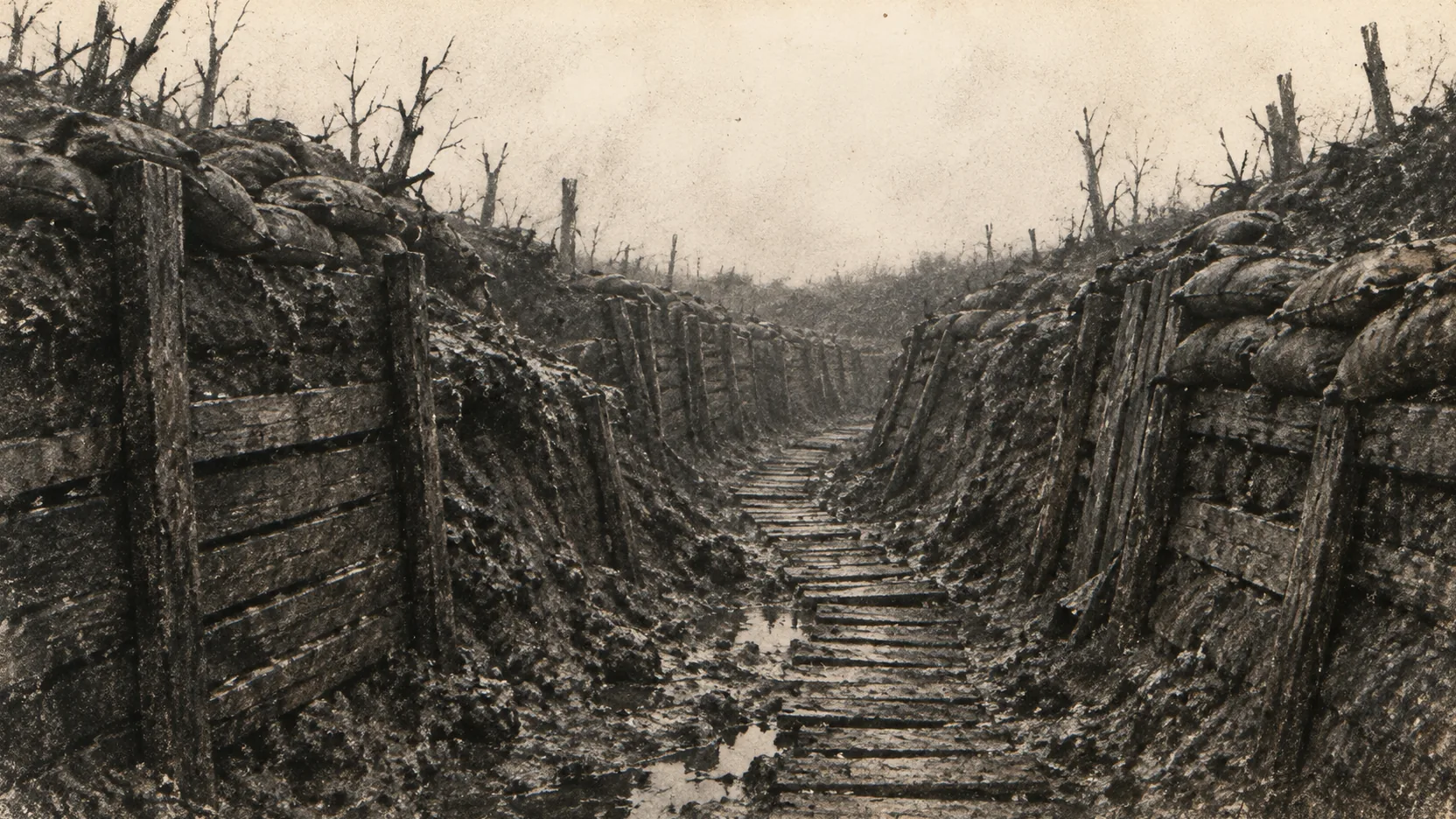

Scenes of War - Rear Area

The rear area was the link between the front and the homeland. Without a well-functioning rear area the front was not effective.
At the head of the entire rear-area organization of an army stood the Inspector-General of the Rear-Area and Railway Service.
Each army had its own rear area, which was headed by a rear-area inspector.

Beyond the rear-area region there were also special administrations in the form of general governments in the occupied territories (e.g., Belgium).
In the East proper administrative districts were formed. In Romania there was a separate military administration.
These rear-area commands were assigned the officers, officials and soldiers required by the army.

The rear-area organization maintained the rear connections of the troops deployed at the front with the homeland.
The primary task of the rear area was to ensure the needs of the army, i.e. the supply of food, fodder, equipment parts, weapon components, ammunition, etc.; at the same time it was also responsible for the civil administration of territories occupied by German troops.


Furthermore, soldiers passing through the rear area had to be checked, e.g. en route to the homeland or when returning from home leave or from a military hospital.
In the rear area the troops also recovered from front-line service, were reinforced and trained.
This is also where the field recruit depots were located.

In the rear area there was also a military court council and Landsturm units as rear-area troops as well as the field gendarmerie.
The railways and bridges had to be protected.


In the rear area there were field bookshops, field post offices, military hospitals, supply depots, workshops, but also agricultural and industrial production.
For the latter purposes so-called economic companies were formed (a total of 344).


So-called collection companies additionally salvaged captured equipment and material of the enemy. Furthermore, labor battalions formed from prisoners of war and/or from civilians were also employed.


In the homeland there were (21) clothing offices. Soldiers and officials worked here with the task of ensuring adequate clothing and equipment for the German troops and also with their manufacture (craft departments).
From the year 1914 a Clothing Procurement Office was established. With this, they moved away from decentralized procurement.
Furthermore, the shortage of raw materials posed a major challenge for army administration and the clothing industry. The answer was rationing and centralization.
Since domestic textile fibers were scarce, paper fabrics made from wood cellulose were increasingly used. This material was produced from local tree stocks. However, the production of paper and paper-blend fabrics was not simple and not very sustainable.


In the rear-area region, clothing depots also existed.
Here, the equipment parts manufactured in the homeland were collected, stored and distributed. Furthermore, workshops for refurbishment, repair, etc. existed.


Recommended Articles

Kriegsgeschichte
Outbreak of the First World War and the German Mobilization
Arms buildups and mutual distrust created, at the beginning of the 20th century, a climate in which a spark could trigger an explosion. The First World War had increasingly become a certainty in the years before 1914. The decisive trigger ultimately proved to be an act of blood on the Balkans. On 28.06.1914 the Austrian heir to the throne, Archduke Franz Ferdinand, and his wife were assassinated in Sarajevo. The background to this assassination was the Slavonic aspirations for freedom within the borders of the moribund Danube Monarchy.

Kriegsgeschichte
Scenes of War - Marches
Figure above: Soldiers on the march. Photo: W. Braemer/ Berlin. Around 1914/15.

Kriegsgeschichte
Scenes of War - Doctors, Stretcher-Bearers, Medics and Military Hospitals
In World War I a total of 8,388,448 wounded were recorded on the side of the Central Powers, of which 4,216,058 were German (according to another source: 5,686,937).