
Daily Routine in Wartime in the Home Garrison - Return of the Flags


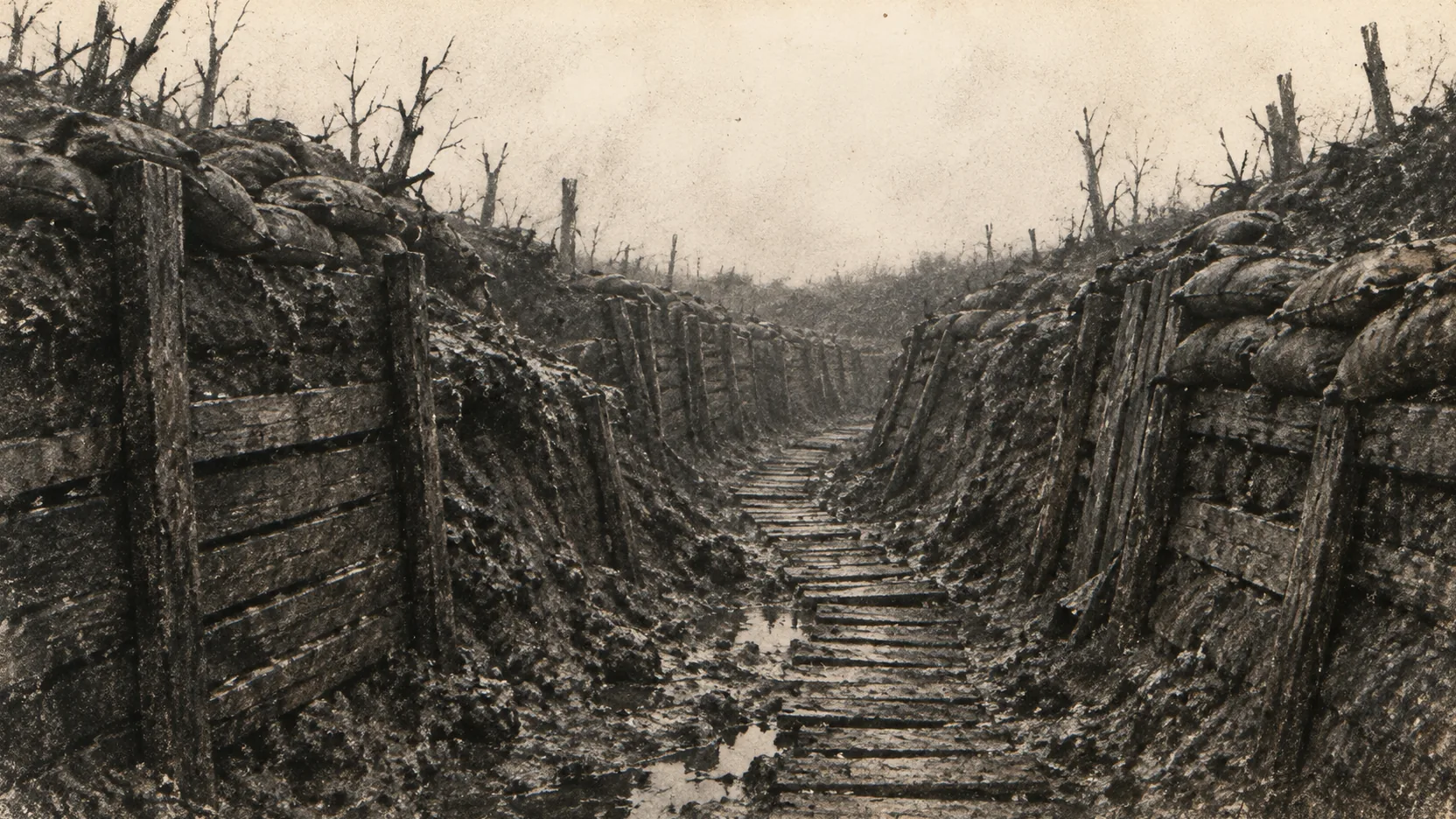
On July 19, 1915, it says in the war chronicle of the city of Münster 1914-18 by Eduard Schulte (p. 120): "In the afternoon, with a marching band playing, 24 flags and standards from the army units of the VII Army Corps were brought from the station to the Royal Palace. Trench warfare in the West leaves no room for the use of the historical field insignia and flags. Under the cover of 120 front-line soldiers, the flags were transferred here."


Recommended Articles

Uniformierung & Ausrüstung
Cuirassier Regiment von Driesen (Westphalian) No. 4
Almost all branches of the armed forces were also represented in the Münster garrison. Some formations were particularly closely associated with the city of Münster as their garrison, namely: the Infantry Regiment Herwarth von Bittenfeld (1st Westphalian) No. 13, the, the 2nd Westphalian Field Artillery Regiment No. 22 and the Westphalian Train Battalion No. 7.

Heeressoziologie
The city of Münster as a Royal Prussian garrison 1813 - 1918
Text will be added later

Heeressoziologie
Barracks (K 4)
The Cuirassier Regiment von Driesen (Westphalian) No. 4 (designation from 1889) arrived at its new garrisons in Westphalia in 1817: Münster, Hamm, Dortmund and Coesfeld. Later, individual squadrons were moved to Paderborn, Neuhaus, Lippstadt, Telgte and Warendorf. From 1871 the bulk of the regiment was assembled in Münster, while the 4th squadron was housed in Hamm and the 5th squadron in Telgte. From 1885 all squadrons were stationed in Münster. However, between 1833 and 1849 the regiment was detached to Silesia, and from 1866 to 1870 to Hanover.