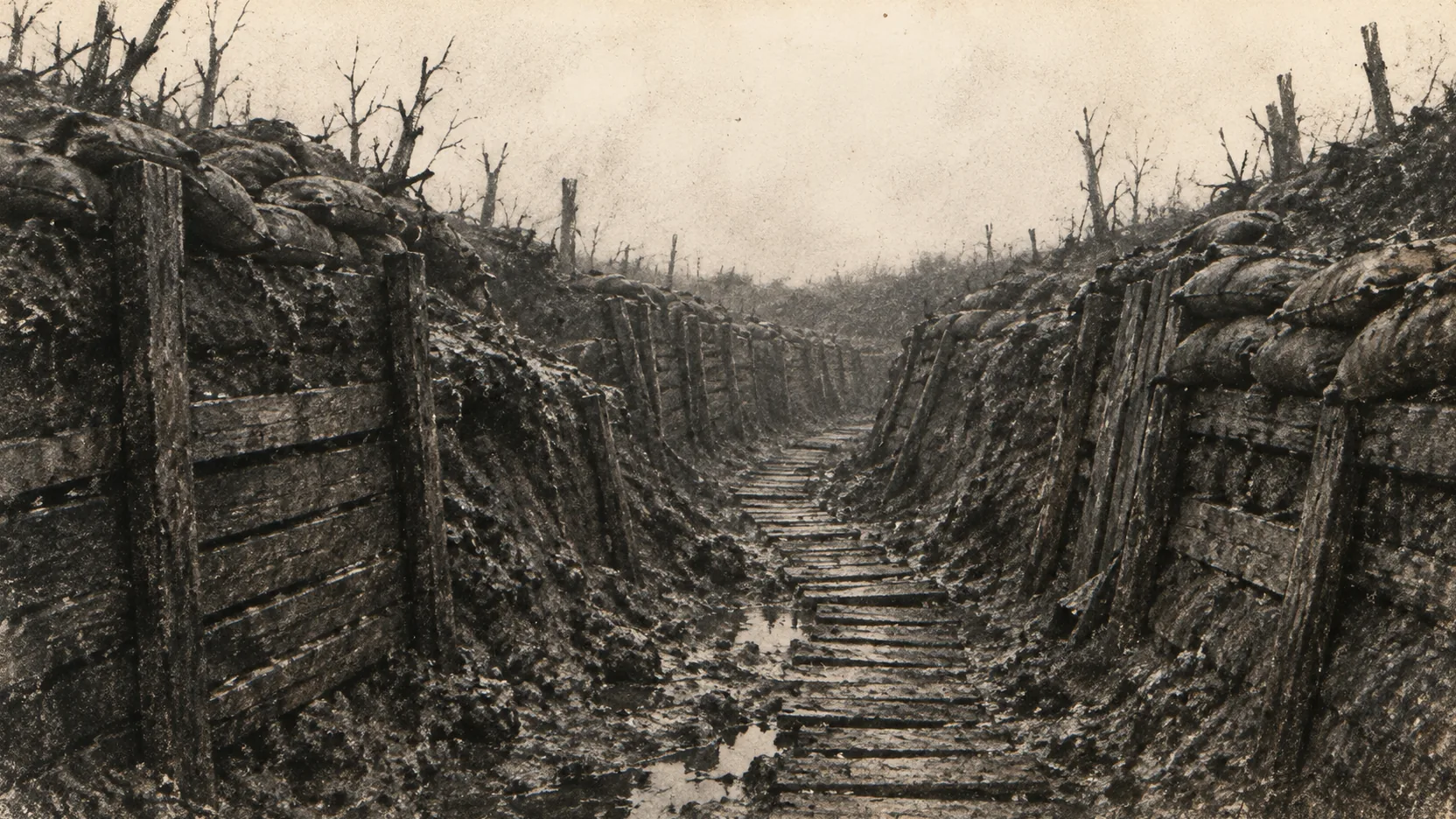

Fritz Rumpf, The Soldier's Garb.
Excerpted from: Bernhard Schwertfeger / Erich Otto Volkmann (eds.), Die deutsche Soldatenkunde, vol. 2, Leipzig 1937.


Recommended Articles

Uniformierung & Ausrüstung
Saxon Uniforms in the Year 1834 in Original Watercolors by Friedrich (Fritz) Neumann
The following shows a collection of original watercolors depicting exclusively Saxon uniforms by Friedrich (Fritz) Neumann. The 16 watercolors were loose in an old folder bearing the inscription: The Royal Saxon Army. 1834. Neumann was a uniform painter of the 19th century who did not leave a unified oeuvre. He is likely the author of the article on uniform works in the Royal Collections in Dresden, published in Communications on the History of Military Dress (1893, No. 12). There he identifies himself as inspector at the Royal Court Theatre in Dresden and reports that he (H.? Neumann) has for years been engaged in producing uniform pictures of all times and peoples for collectors and enthusiasts. Richard Knötel also gratefully refers elsewhere to this uniform painter.

Uniformierung & Ausrüstung
R. v. Ottenfeld - O. Teuber, The Austrian Army from 1700 to 1867, Vienna 1895.
The illustrations shown below are based on an original older reproduced photo series in the author's possession.

Uniformierung & Ausrüstung
A Short History of the Uniform - Part 5 - The Development of the Uniform from the 17th to the 18th Century Using the Example of France
In the second half of the 17th century a unified government authority with absolute power emerged in France. When Cardinal Mazarin died on 09.03.1661, the young King Louis XIV declared that he would appoint no successor and would henceforth rule personally. However, he allowed himself to be advised by the Secret Council of State. State power now concentrated entirely in the hands of King Louis XIV (05.09.1638 – 01.09.1715). He is regarded as the principal representative of courtly absolutism and became a model for many other European rulers. Convinced of the divine right of kings, the monarch presented himself magnificently and, after overcoming the noble Fronde, claimed absolute authority in all state matters as an autocrat.