
IR 13 - Burials and Graves


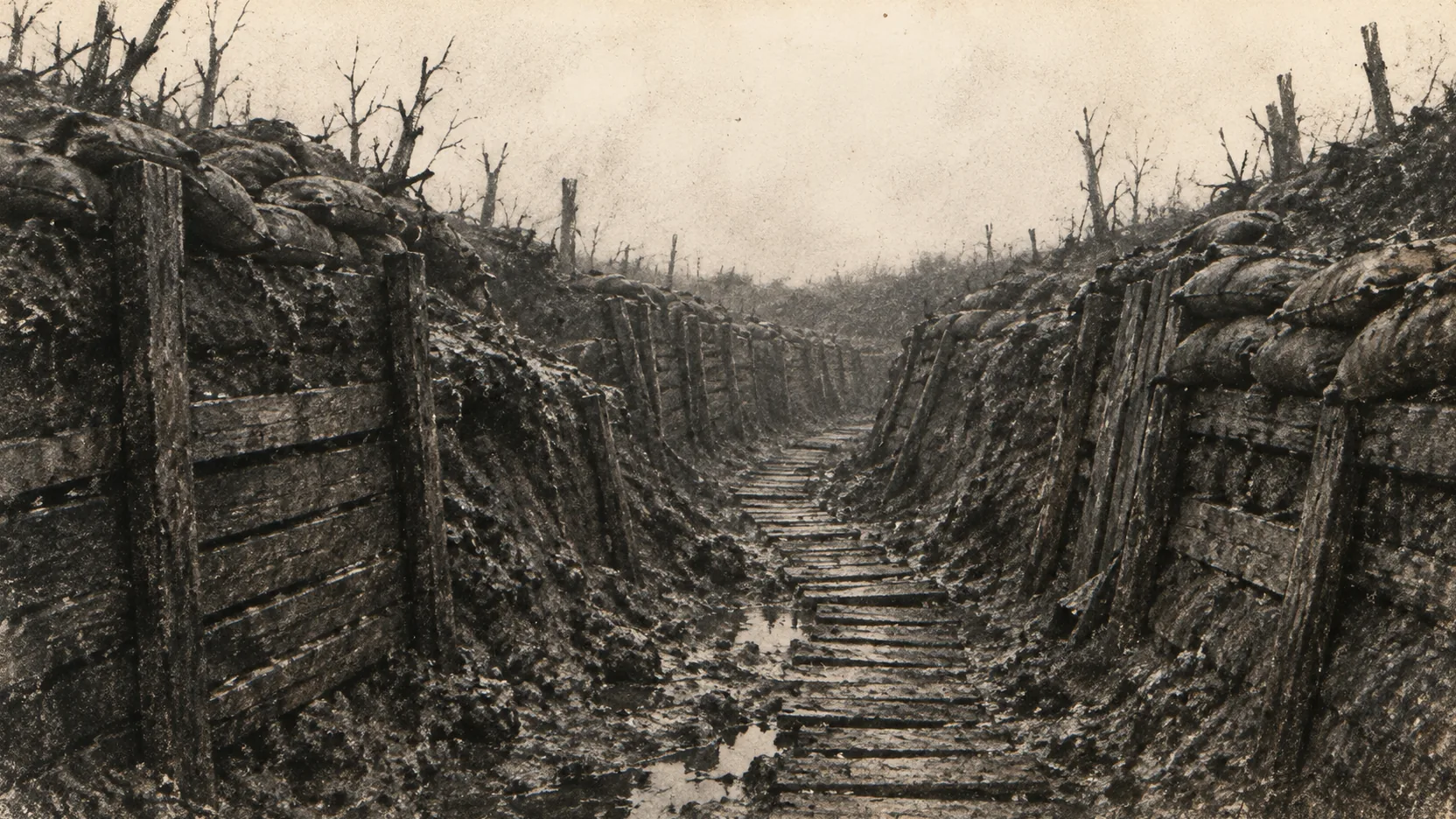
Germany suffered 1,773,700 deaths in the First World War (according to other sources: 2,037,000). The German losses are distributed as follows: field/occupation army 1,900,876, navy 34,836, in the colonies 1,185. In addition there are about 100,000 missing persons who were considered dead. Of the approximately 281,000 officers of the German army, about 55,000 (= 19%) fell. The losses among the ranks – including non-commissioned officers – are estimated at approx. 14%. About 1,250,000 dead German soldiers were buried outside the homeland, among them in the colonies 1,053 German colonial troops. The recorded losses of individual regiments were mostly dramatic.

Until and including November 1916, IR 13 counted 11,047 dead, missing and wounded soldiers (see list below). In total 175 officers and 4,038 non-commissioned officers and enlisted men of this formation fell in the First World War. The war memorial on the promenade commemorates these losses. The monument was created by the sculptor Heinrich Bäumer (1874 - 1951 in Münster); the laying of the foundation stone took place on 03.06.2023 and the inauguration on 03.05.1925.


Recommended Articles

Heeressoziologie
The Military Academy at Münster in Westphalia

Heeressoziologie
The final rank list of the Münster military, communicated by Eduard Schulte

Kriegsgeschichte
The Prussians are coming - The first occupation of Münster by the Prussians (1802 – 1806)
Kochendörffer describes the territorial situation of Westphalia around the turn of the century (1800) as follows: "If we look at a historical map of Westphalia from the beginning of the 19th century, the colourful mixture of territories from which today's Province of Westphalia is composed immediately stands out, many of which were legally sharply separated from one another: there are the two ecclesiastical principalities Münster and Paderborn, which in particular gave Westphalia its character, the former forming mainly today's Regierungsbezirk Münster, reaching to Prussian East Frisia, Paderborn to the east, which during the 17th and 18th centuries was several times, but only through the person of the common bishop, connected with Münster; then the Prussian "provinces" Mark, Minden and Ravensberg, Tecklenburg and Lingen, partly spatially separated from each other, also far removed from the heartlands of the Prussian monarchy and always regarded by its politics only as outposts, as compensation objects, furthermore the Electorate of Cologne's possessions, the Duchy of Westphalia and the Vest Recklinghausen, further south Siegen and the counties of Wittgenstein, then not yet belonging to Westphalia, and sprinkled into these compact territories counties e.g. Steinfurt, Rietberg, Gemen, Limburg, Dortmund, Herford, while from the north the related Osnabrück pressed in like a wedge between the Prussian provinces and the Münster upper and lower prince-bishoprics ...." (pp. 98/99).