
Austrian Uniforms Through the Ages - From the 2nd Half of the 17th Century to the First World War
Introduction - the Emergence of the Standing Army in Austria
Standing troops were maintained in Austria even before the Thirty Years' War.
Already in the first half of the 16th century there are signs in Austria of a professional army based on recruitment.
However, the actual foundation for the standing Austrian army was laid by Wallenstein (Albrecht Wenzel Eusebius von Waldstein, *24.09.1583 in Hermanitz on the Elbe, Bidschower District; †25.02.1634 in Eger, Elbogen District).
After the Thirty Years' War the Emperor retained 9 regiments of foot and 10 regiments of horse. At the death of Ferdinand III (*13.07.1608 in Graz; †02.04.1657 in Vienna) the Austrian army strength is said to have amounted to 30,000 men.
The institution of the Werbeherr (recruiting patron) was abolished, the troops were made directly accountable to the Emperor and were gradually reinforced.
During the second half of the 17th century Austria fought almost continuously against the Turks and the French. In 1683 Vienna was even besieged by the Turks and only the timely arrival of a relief army under the Polish king John III Sobieski was able to save the city.
In the War of the Spanish Succession (1701 to 1714) the Austrian armed forces numbered over 100,000 men (Glaise von Horstenau, p. 115; according to Fiedler: 1705: 110,000 men).
Above all, the superior military genius of Prince Eugene ultimately brought the Turkish wars and the War of the Spanish Succession (1702–14) to a victorious conclusion for Austria. Austria became a great power that increasingly turned its political interest to the east and south.
The principal commanders of this period were Ludwig Wilhelm I, Margrave of Baden-Baden (1655–1707), Raimund Count of Montecuccoli (1609–1680) and the aforementioned Prince Eugene of Savoy (1663–1736).
Regularly one quarter of the Austrian armed forces consisted of mounted troops. However, in this early phase there was a lack of central leadership and systematic organization.
Only under the Austrian commander Prince Eugene (Eugene Francis, Prince of Savoy-Carignan, *18.10.1663 in Paris; †21.04.1736 in Vienna) was the development of the Austrian army handled more methodically.
Regiments were raised according to nations or the individual lands raised the various regiments themselves. The manpower strength of the individual formations was not nationally uniform, and the German regiments were not allowed to take on certain nationalities (French, Italians, Poles, Hungarians and Croats).
The officer corps consisted of diverse elements and was essentially a colorful mixture of different nationalities. Italian and Spanish influence was very strong, French influence less so. John Mollo (p. 42) points out that "the often penniless but capable officer (in the Austrian army) had better chances of advancement than in any other European army." The sale of commissions, however, remained customary for a very long time; promotions were regularly dependent on the commanding colonel and were therefore sometimes more a mark of favor than a response to corresponding performance. The influence of the court and of established families remained important for a long time.
Illustrations on a larger commemorative sheet for the 200th anniversary of the Imperial and Royal Infantry Regiment Hoch- und Deutschmeister from the year 1896.


According to Ullrich (ibid., The Warfare in the Changing Times, Leipzig 1949, p. 147 ff.) the first standing army of Austria was a Habsburg household troop. The Austrian army recruited from the hereditary lands bore the main burden of the fighting.
In the age of absolutism, mercenaries hired from time to time had become standing armies that were now constantly at the disposal of the absolute rulers, as in France and Brandenburg-Prussia. The Habsburgs only succeeded very late in imposing absolutism in their own hereditary lands, and the development into a centrally directed overall state essentially lasted throughout the century. The corporate special interests, the independent power of regimental owners and the national diversity therefore long opposed the emperor's attempt to unify the state and especially the army and to align them according to consistent principles.
Around 1705 the Austrian army numbered 110,000 men; by 1756 it had already reached 165,000 men. After the death of Prince Eugene his guiding work was not continued and a deceptive sense of security and a peculiar laxity and carefreeness set in. Above all, a clear consolidation of the state's forces was lacking.
After the death of Emperor Charles VI in 1740 his daughter and successor Maria Theresa (*13.05.1717 in Vienna; †29.11.1780 there) had to defend her inheritance in the War of the Austrian Succession (1740–1748) against an overpowering coalition. Austria's main opponent was the tightly organized Prussian military state of Frederick the Great (1712–1786), who in 1740 invaded the Austrian province of Silesia and was allowed to keep it at the peace settlement.
Also against this background a tighter centralization of the administration of her lands was undertaken under Empress Maria Theresa, which also included a comprehensive reform of the military system. The empress's popular attempt to recover the lost territory in the Seven Years' War (1756–1763) failed, however. Prominent military figures of this era were the Austrian field marshals Leopold, Imperial Count von Daun (1705–1766) and Gideon Ernst Baron von Laudon (1717–1790).


A peculiarity of Austrian military history was the so-called "Military Frontier." This had its historical origin in the defense ordinances of the 15th and 16th centuries and originally served to protect the border against Turkish incursions. Soldiers were settled in the area of the said frontier. They were recruited for the most part from refugees from the Balkan regions dominated by the Turks. Every able-bodied man was obliged to military service for a small pay. The Military Frontier was not dissolved until 1869.
Because of the Military Frontier, Austria had excellent light troops, which, for example, proved themselves in the War of the Austrian Succession including the Seven Years' War.


The grenadiers received higher pay than the other branches and were considered elite. They wore fur caps.
Of the 56 Austrian infantry regiments that existed at the outbreak of the Seven Years' War, 39 were German, 11 Hungarian, 4 Netherlands and 2 Italian.
Although the Hungarian regiments had coats like the German regiments, the waistcoat had a lacing and the breeches were adorned with looped trimmings. They also wore sashes like the hussar regiments.


According to John Mollo (p. 41 ff.) at the start of the Seven Years' War (1756–63) there were 44 infantry regiments (each with 2,408 men), 10 infantry regiments (each with 1,000 men), and 1 battalion (with 658 men). With the frontier troops (of which always one third were mobilized) the infantry thus numbered 142,610 men.
The cavalry comprised 18 cuirassier regiments (each with 818 men), 12 dragoon regiments (each with 817 men) and 10 hussar regiments (each with 615 men). In addition there were 1,000 frontier hussars. Thus the mounted troops numbered 31,678 men.
The artillery counted 3,072 men, specifically 24 German artillery companies (each 203 men) and 8 Dutch companies (each 768 men). Furthermore there were 2 miner and pioneer companies with 484 men each.
On paper the Austrian army thus amounted to 177,444 men; in practice, however, the infantry and cavalry regiments showed a considerable shortfall.
The Austrian infantry consisted of so-called German and Hungarian regiments. In addition there were the already mentioned irregular troops, commonly referred to briefly as Croats and Pandurs.
The strength of the infantry regiments with four battalions remained relatively strong. Tactical practice among the infantry was, however, very inconsistent and the manner of firing sometimes differed from regiment to regiment. Therefore a new uniform system for the entire army should be developed. The corresponding regulations of 1749 became binding from 1751.
The internal organization of the frontier troops was aligned with the rest of the line infantry after 1748. A frontier regiment now also had four battalions and two grenadier companies (together 4,080 men).


The Uniforms of the Austro-Hungarian Infantry 1762 by Richard Knötel. Taken from: Communications on the History of Military Costume. 1895.


The cavalry comprised cuirassiers, dragoons and hussars. The latter were mostly responsible for skirmishes, that is, smaller or accompanying engagements, as well as for reconnaissance.
In addition to the regular cavalry there was also irregular cavalry, namely the aforementioned frontier squadrons.


The reforms initiated after the War of the Austrian Succession (1740–48) were intended to remedy recognized deficiencies and to prepare the Austrian army for another and decisive confrontation with the Kingdom of Prussia. They were also aimed at cost savings.
In 1752 a military academy was founded in Vienna (Wiener Neustadt), dedicated to the training of officers and intended to create a new type of officer.
Under the statesman Friedrich Wilhelm, Count von Haugwitz (*11.12.1702 in Brauchitschdorf, Principality of Liegnitz; †30.08.1765 in Knönitz, Margraviate of Moravia) the recruitment system was reorganized (patent of 04.08.1753). It also envisaged the formation of so‑called supplementary militias. Moreover, each regiment was assigned a specific local area for recruitment purposes.
The main burden of military service was borne, moreover, by the peasants and members of the working class. However, this was no different in other European states.
The army staff was reformed. Each supreme commander was now supported by a general adjutant. Furthermore, a quartermaster-general was to oversee the establishment of camps and positions during a campaign.
Also noteworthy is the reform of the technical troops (from 1748) under the decisive influence of Prince Wenzel von Liechtenstein (*09.08.1696 in Prague; †10.02.1772 in Vienna). According to Mollo (p. 45), it is thanks to him "that the Austrian artillery achieved a mobility and readiness for action hitherto unknown." From 1748 new guidelines applied to this branch. Even using his own funds, as director-general of the artillery he shaped it into probably the strongest instrument of the Austrian army. It received a new structure, each brigade got a non-commissioned officers' school and the promotion prospects for particularly qualified artillerymen to become officers were improved. The gun equipment was improved and above all the heavy artillery (howitzers) was greatly increased during the course of the Seven Years' War. Each regiment also received its own guns, namely 3-pounders.
The pioneer corps was also expanded; German, Hungarian, Italian and Dutch brigades were formed. In Vienna and Brussels there were pioneer academies, the bridging equipment was replaced and bridge companies were formed.
Mollo (p. 47) furthermore praises the care of the sick and wounded, modeled on the French arrangements, as exemplary.
The Imperial Austrian Army 1748–56. Taken from: Great General Staff (ed.), The Seven Years' War 1756–1763. Vol. 1, p. 130 ff.


During the Revolutionary Wars Austria fought revolutionary France in shifting coalitions, suffering particularly heavy defeats and large territorial losses in northern Italy.
After Napoleon Bonaparte crowned himself emperor in 1804, Europe was plunged into a series of bloody wars that only ended with the final defeat of the French army at the Battle of Waterloo in 1815 and the exile of the emperor to the island of Saint Helena. Austria was defeated in 1805 together with its Russian allies at the Battle of Austerlitz and could not prevail in its rash uprising in 1809 against France. Although the Austrian troops under Archduke Charles achieved a notable success at Aspern–Essling (21 and 22 May 1809), the decisive battle at Wagram (5 and 6 July 1809) was lost.
Only when, in the so‑called Wars of Liberation, Austria, Prussia, Russia and England joined in an alliance could France's drive for hegemony under Napoleon I (1769–1821) be stopped.
Duffy (Austerlitz, p. 35 ff.) criticizes the condition of the Austrian army before the Austerlitz campaign as in many respects antiquated. The military budget had been heavily cut, many soldiers were furloughed home to reduce maintenance costs, and the transport columns for supplies and the artillery had even been entirely disbanded. Conscription applied only in part of the Austrian territories; volunteer recruitment still played a large role. Higher-level formations (divisions, brigades) did not exist in peacetime.
Austrian Uniforms in the Year 1796


According to uniform plate No. 34 (Brauer plate), the uniform, equipment and armament of the Austrian infantry changed little from 1798–1815. "1808–15 a coat was worn that differed from the one introduced in 1798 only in that its skirts were cut more deeply at the front, so that their turned-over ends no longer hung to the sides but hung backward. The crested helmet had been introduced in 1798, but from 1807 on the infantry (with the exception of the grenadiers), the Hungarian first, gradually received the shako. The sabre, abolished for the infantry in 1798, remained, together with the fur cap and the grenade on the cartridge pouch and bandolier as an insignia, reserved for the grenadiers. The coat, in the field rolled on the knapsack or worn en bandolière over the shoulder, was of brown-gray cloth, the shoulder flap and standing collar faced in the regimental colours."


After the Napoleonic Wars national antagonisms within the Danube Monarchy grew and threatened the stability of the Austrian Empire. Nationalist movements strengthened. However, the various nationalities within the Austrian Empire were not united, and so the Habsburg monarchy was able to hold out for a long time. Allied with Prussia and Russia in the so‑called Holy Alliance, the rulers agreed on the domestic suppression of all liberal and democratizing ideas. This was intended to guarantee political stability in Europe or to preserve the existing power structures. In Austria this task was served above all by the imperial-royal army. The conservative and restrictive domestic policy of the multiethnic state was long shaped by the statesman Klemens Wenzel Lothar von Metternich (*15.05.1773 in Koblenz; †11.06.1859 in Vienna).
In 1815 the German Confederation was created. This was a confederation of states based on an agreement of the princes and free cities of Germany, including the Emperor of Austria and the Kings of Prussia, of Denmark with regard to Holstein and of the Netherlands with regard to Luxembourg. It existed from 1815 to 1866. The task of the German Confederation was (among other things) to guarantee the internal and external security of the member states. The instrument intended for this was the Federal Army. It was the armed force of the German Confederation from 1815 to 1866. Further details were regulated by the Federal War Constitution.
Austria, although only partly belonging to the Confederation's territory, provided a large contingent of the Federal Army.
Of Austria's total area of 670,941 sq km, only 197,575 sq km belonged to the Confederation. The population ratio was 33,630,000 to 10,869,000.
In the Biedermeier era the Austrian army, according to Ortenburg (p. 11 ff.), was composed as follows:
63 line infantry regiments
17 frontier infantry regiments
1 Tyrolean Jäger regiment
12 Jäger battalions
8 cuirassier regiments
6 dragoon regiments
7 regiments of chevau-légers (between 1851–54 converted into other cavalry branches)
12 hussar regiments
4 uhlan regiments
5 field artillery regiments
4 companies of bombardiers
Corps of artificers (rocket artillery)
as well as special units
there was also a navy.


In 1859 Austrian rule in northern Italy led to a conflict with Sardinia and its ally France; this resulted in the Franco-Austrian War, which, with the defeats at Magenta and Solferino, brought about the end of Austrian dominance in Italy. The unification of Italy could no longer be stopped.
Austria also suffered a serious setback in Germany when the rivalry between Prussia and Austria for supremacy finally culminated in open hostilities in 1866, and the Austrian army under Feldzeugmeister (General of Ordnance) Ludwig August von Benedek lost the decisive battle at Königgrätz (Sadowa) due to superior Prussian command and armament.
As recently as the German–Danish War of 1864, Austria had fought alongside Prussia.
Austria was also indirectly involved in the intervention wars in Mexico from 1864 to 1867, since the Austrian Archduke Maximilian was installed by Napoleon III as emperor of the newly proclaimed Mexican Empire; he ultimately acted unsuccessfully against the insurgents and, after his capture in 1867, was even executed by the Republicans.


On the uniforming of the Austrian infantry 1848–67 (after Ottenfeld-Teuber and Richard Knötel).
In 1850 a double-breasted coat was introduced for the entire line and border infantry as well as for the Jägers, artillery and extra corps. This coat was lined and had two pockets.
On the turned-down collar there was at the front an egalizing cloth (collar flap) with a small uniform button on each side.
From the beginning of the 1860s the coat was worn in the field and also on marches in peacetime. In warm weather the coat was worn over the shirt, in colder weather over the tunic.
On the 1866 campaign the coat was worn buttoned — including by the Jägers — and the white leather equipment was worn crossed over it. Officers also wore the coat.
A shako served as headgear. It was also worn by the sappers, miners, pioneers, etc. It was made of matte waterproof felt and showed the yellow double eagle and the national emblem on the front.
Non-commissioned officers were distinguished by braids above on the shako.
In 1862 the shape of the shako was improved; it became slightly narrower toward the top.
A cover was worn in the field.
The fur cap of the grenadiers had been abolished.
The camp cap had the color of the trousers with white facings.
Officers also wore the shako made of felt with a leather top and gold braids.
The double-breasted (eight buttons on each side) tunic was made of fine white cloth with a rounded standing collar. Collar, cuffs, shoulder straps and facings — e.g., down the front and around the lower edge — showed the respective regimental color.
The tunic had been introduced in 1849. In 1859 it received a lying collar and later had only a single row of buttons.
Staff officers had gold or silver braids on the collar and on the cuffs, depending on the button color.
The trousers (pantalons) were made of light-blue cloth with white facings.
The Hungarian regiments wore Hungarian-style breeches, i.e., with lacing.
In summer trousers made of white fabric were worn.
The neck scarf was black.
Officers' sabers were made of steel; the saber belt was of red saffian leather.
The field sash consisted of black-and-yellow silk. It was also worn with the coat on, in bandolier fashion, i.e., over the right shoulder with the tassels toward the left side. From 1868 the officers' sash was again worn around the waist.
The camp cap of the officers had a black lacquered visor.

On the uniforming of the Austrian cuirassiers 1848–67 (after Ottenfeld-Teuber and Richard Knötel).
In 1850 the cuirassiers received white single-breasted tunics with ten buttons.
Since 1840 the breeches had been light blue with a white side facing; previously the trousers had been white.
Gray overtrousers with black leather inserts were also used.
The woolen roll on the crest of the helmet was removed in 1850.
The covers became black.
From 1860 no cuirass was worn any longer.
The coat was white.


On the uniforming of the Austrian dragoons 1848–67 (after Ottenfeld-Teuber and Richard Knötel).
In 1852 the chevauleger regiments were converted into dragoons or uhlans.
By 1860 only two dragoon regiments remained. They were converted into cuirassiers or disbanded.
In 1850 the tunic was introduced. It was white and double-breasted.
Collar, shoulder straps and sleeve cuffs as well as the facings were in the respective regimental color.
The helmet wool roll was omitted (as in the cuirassiers).


On the uniforming of the Austrian uhlans 1848–67 (after Ottenfeld-Teuber).
Text


On the uniforming of the Austrian artillery 1848–67 (after Ottenfeld-Teuber).
Text


Austrian uniforms in 1864. Colored drawings by Knötel the younger.


At the turn of the century the Austrian state covered an area of 625,415 sq km and had a population of 47 million (the occupied territory Bosnia/ Herzegovina with an area of 51,200 sq km and 2 million inhabitants is not included here).
The ethnic distribution of Austria, a dual state since 1867, was very heterogeneous, which naturally led to national conflicts and social problems. German-speakers accounted for 25%, while the Hungarians made up 20%, the Czechs 13%, the Serbs/Croats 10%, the Poles 10%, the Ruthenes slightly less than the Poles, the Romanians 7%, the Slovaks 4%, the Slovenes 3% and the Italians 1%.
This stratification of the population was also reflected in the composition of the army. Since 1868 conscription (compulsory service/Landsturm obligation) applied in Austria.
The armed forces consisted of the k. u. k. Army, the k. u. k. War Navy, the Landwehr and the Landsturm. In peacetime the army was subordinate to the Imperial War Ministry; in the event of war it came under the supreme command of the Emperor.
Around 1896 it numbered roughly 800,000 men in the army and in the navy; both Landwehrs comprised 328,000 men.
The army encompassed all branches (infantry, cavalry, artillery, etc.).


On 28 June 1914 the Austrian Archduke Franz Ferdinand was shot in Sarajevo by a Serbian nationalist. This assassination triggered World War I. The Museum of Military History in Vienna displays, in addition to the automobile in which the heir to the throne and his wife were shot, his bloodstained tunic.
In the ensuing clash of nations Austria/ Hungary fought on the side of Germany and Turkey against Russia, France, Great Britain, Italy and the United States, which entered the war in 1917. Around 1914, with 51.3 million inhabitants, Austria had 3 million trained soldiers; the mobile forces amounted to 2.5 million at the outbreak of war (peacetime army as % of the population: 0.9); the field army numbered 10 cavalry and 48 infantry divisions.
Among the 9 million dead of the 1,563-day war were 1.2 million deceased Austro-Hungarians.
For Austria the defeat in this bloody struggle meant the collapse of the monarchy; Hungary was separated from Austria and new states emerged from former territories of the old k. u. k. Danube Monarchy, such as Czechoslovakia. With the old empire the time-honored k. u. k. army also ceased to exist.
Austro-Hungarian uniforms around the turn of the century after color drawings by Richard Knötel.


World War I changed everything, including the outward appearance of the soldier of that era. As early as 1868 the Austrian infantry switched to dark blue uniforms. In 1909 the field uniform in the well-known pike-grey color was introduced.
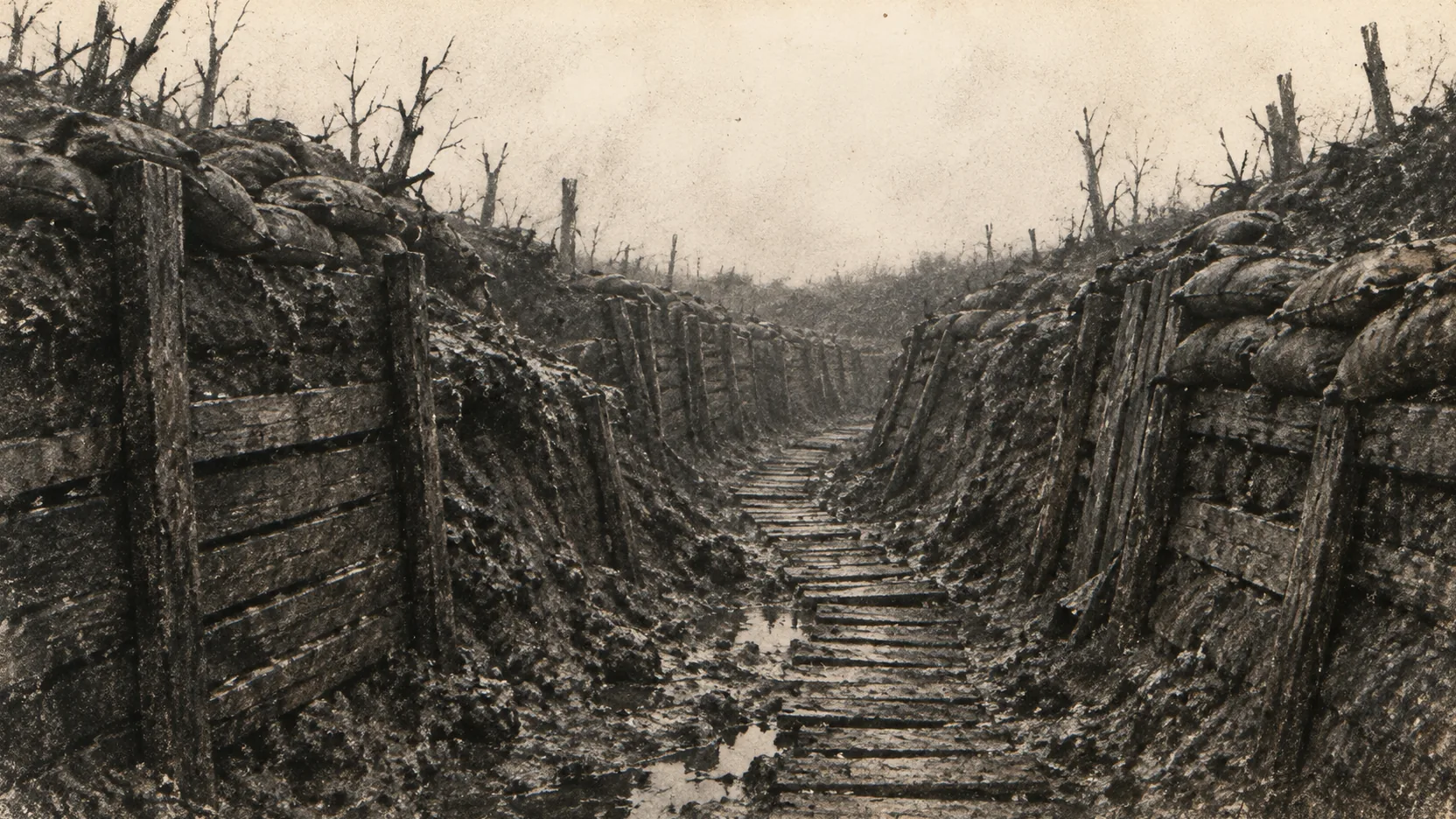
The experiences in the material battles of World War I caused the last reminders of the colorful coat to disappear and the combat uniform modeled on the German example to become the usual clothing of the soldier in trench warfare.
The Austro-Hungarian soldier now also wore the plain Litewka, the gas mask and the deep-reaching steel helmet.
Sources
Allmeyer-Beck/Lessing, The Imperial War Peoples. From Maximilian I to Prince Eugene 1479–1717, Munich/Gütersloh/Vienna 1978.
Allmeyer-Beck/Lessing, The Army under the Double Eagle. Habsburg's Armies 1718–1848, Munich/Gütersloh/Vienna 1981.
Allmeyer-Beck/Lessing, The K. (u.) K. Army 1848–1914, Munich/Gütersloh/Vienna 1974.
Egbert Apfelknab, Waffenrock und Schnürschur. The Procurement of Uniforms for the Austrian Army in the 18th and 19th Centuries, Vienna 1984.
Oskar Brüch (Günter Dirrheimer), The k.u.k. Army 1895. Vienna 1983.
Christopher Duffy, The Battle of Austerlitz. Napoleon's Greatest Victory. Munich 1979, p. 35 ff.
Christopher Duffy, Maria Theresa and Her Army. Stuttgart 2010.
H. A. Eckert and D. Monten (edited by Georg Ortenburg), The German Federal Army. Vol. III. Austria - Liechtenstein - Swiss Confederation, Dortmund 1981.
Siegfried Fiedler, Outline of Military and War History. 3 volumes, Munich 1972 ff.
Theodor Fuchs, History of European Warfare. Part II. From the Formation of the First Standing Armies to the Emergence of Modern Peoples' Armies, Munich 1974, p. 39 ff., p. 165 ff.
Liliane and Fred Funcken, Historical Uniforms. Napoleonic Era, Munich 1979, p. 120 ff.
Philipp Haythornthwaite, The Imperial Army of Austria. Infantry and Cavalry 1740–1780, Sankt Augustin 2004.
Edmund Glaise von Horstenau, Old Austria's Army in German History, in: Karl Linnebach (ed.), German Army History, Hamburg 1935, p. 114 ff.
Preben Kannik, Uniforms in Color, Berlin 1967, passim.
John Mollo/Malcolm McGregor, Uniforms of the Seven Years' War 1756–63, Munich 1977, p. 41 ff.
Georg Schreiber, The Emperor's Cavalry. Austrian Cavalry in Four Centuries, Vienna 1967.
Johannes Ulllrich, Warfare in the Course of Ages, Leipzig 1941, p. 147 ff.
Notes
See also the following contributions:
History of the Adjustment of the Austrian Army. in Yearbooks for Army and Navy, Vol. 92.1, p. 77 ff.
Austrian Uniforms in Lithographs by F. Gerasch.
Austrian soldiers fighting insurgents in Bosnia-Herzegovina in contemporary drawings (from 1878).
Recommended Articles

Uniformierung & Ausrüstung
Manuscript of the Bourgeois of Hamburg. Reproduction (facsimiles) from the year 1902 (Paris). Part IV.
The plates are taken from the above-mentioned original edition. The following are illustrations of Dutch troops.

Uniformierung & Ausrüstung
Manuscrit du Bourgeois de Hambourg. Reproduction (facsimiles) from the year 1902 (Paris). Part I.
The plates are taken from the aforementioned original edition. First come illustrations of the Spanish Division de la Romana.

Uniformierung & Ausrüstung
Italian Uniforms Through the Ages - after drawings by Italo Cenni
Below are plates 1 - 17 from the relatively rare work MILIZIE ED ESERCITI D`ITALIA by Vittorio Giglio from 1927 (Milano). The drawings are by Italo Cenni. In addition, the work is consistently illustrated with black-and-white drawings.